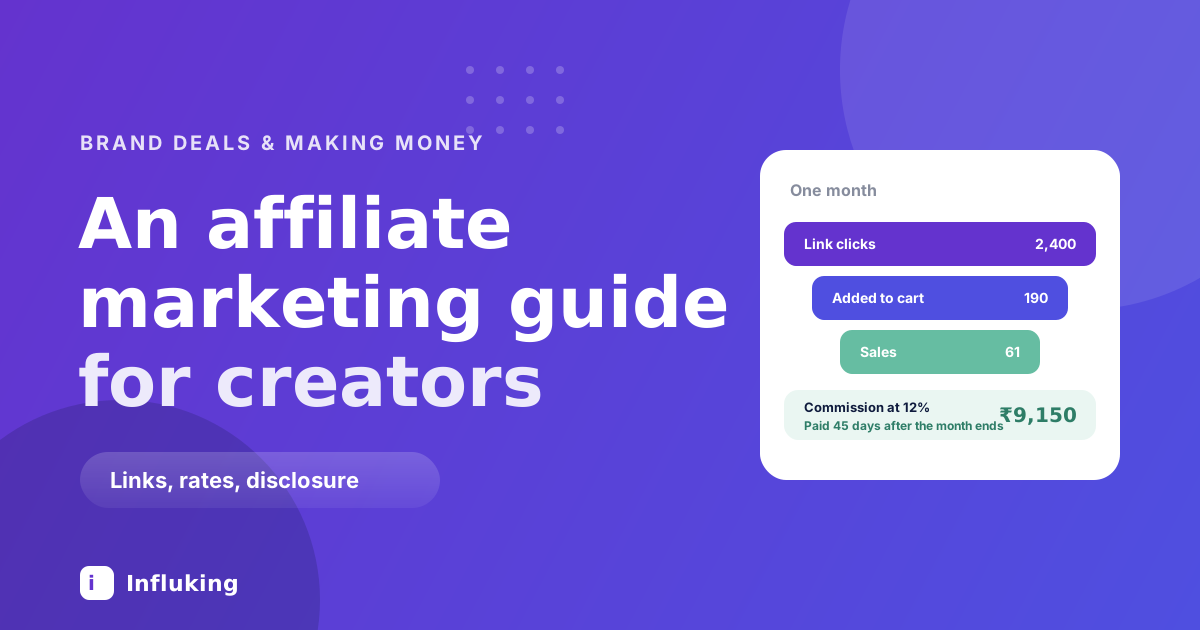
Affiliate marketing pays you a cut when someone buys through your link. Unlike a brand deal, nobody pays you for the post itself, so a bad month earns nothing. A good month earns while you sleep, and content from last year keeps paying.
Most creators try it, earn a few hundred rupees, and conclude it does not work. Usually the problem is that they promoted things nobody was going to buy anyway.
How the models differ
- Pay per sale. The standard. You get a percentage of the order value, typically somewhere between 3% and 15% depending on category, and much higher on digital products where there is no cost of goods.
- Pay per lead. A fixed amount when someone signs up, books a demo or starts a trial. Common in software and finance, and often better paying than sale-based because the action is easier.
- Pay per install. Apps. Small amounts, high volume, and quality varies enormously.
- Recurring. A percentage for as long as the customer keeps paying. Rare, and worth far more than a one-off, so it is worth asking whether a software brand offers it.
Physical products in low-margin categories pay badly. Digital products, software and services pay well because the margin exists to share.
The cookie window is the part people miss
When someone clicks your link, a cookie records that you referred them, and it lasts a defined period. If the window is 24 hours and they buy a week later, you get nothing.
Windows range from 24 hours to 90 days or longer. A 5% commission with a 30-day window is often worth more than a 10% commission with a 24-hour one, because people rarely buy on the same day they discover something. Ask about the window before you judge a rate.
What actually converts
The mistake is treating affiliate content as advertising. Nobody clicks a link because you mentioned a product.
- Things you already use. Genuine specificity about a product you own converts several times better than a generic recommendation, because it sounds different.
- Answers to buying questions. "Which one should I get for a small kitchen" is a purchase moment. "Top 10 gadgets" is not.
- Comparisons. People searching for X versus Y have already decided to buy something and are choosing between two options. This is the highest-converting format there is.
- Solutions to a problem. Lead with the problem, and the product is the answer rather than the subject.
- Evergreen content. A post that keeps getting found keeps earning. This is where affiliate beats sponsorship over time, and it is why being findable in search matters more here than elsewhere.
The link problem on Instagram
Instagram does not allow clickable links in captions, which is the structural difficulty with affiliate income on the platform.
What works: a link in bio pointing to a simple landing page that lists your current recommendations, Story links, and telling people in the video to check the bio. What works less well than people hope is expecting anyone to type a URL.
Keep the landing page short. A page with six links organised by category converts better than one with forty. And put the thing you just posted about at the top, since most traffic arrives from one recent post.
Broadcast Channels and Notes are both useful here, because they reach people who already trust you enough to have opted in.
Disclosure is not optional
In India, influencer advertising guidelines require paid partnerships and material connections to be disclosed clearly, and affiliate links are a material connection because you earn from the purchase. The disclosure has to be visible without tapping "more", in a language your audience understands, and on the post itself rather than buried in a bio.
Use plain words. "I earn a commission if you buy through this link" is clear. Vague tags are not, and the rules keep tightening rather than loosening, so check the current position rather than copying what other creators do.
Beyond compliance, disclosing openly tends to help rather than hurt. Audiences assume commercial motives anyway, and being straightforward about it reads as confidence.
What to expect financially
Affiliate income is a percentage of a percentage. If a post reaches 20,000 people, perhaps 2% click, and perhaps 3% of those buy, that is around twelve sales. At ₹150 commission each, that is ₹1,800 from a post that might have earned ₹15,000 as a sponsorship.
The case for it is that the sponsorship pays once and the affiliate post keeps paying, and that it works at any audience size. A 900-follower account in a niche with expensive products can out-earn a 50,000-follower lifestyle account, which is the same dynamic covered in earnings by tier.
Treat it as a layer under your other income rather than a replacement for it.
Choosing programmes
- Start with products you already recommend for free. That list is your programme shortlist.
- Check the commission rate and the cookie window together.
- Check the payout threshold and schedule. Some hold payments until you reach an amount, which can take months.
- Check whether they pay on the full order or only the referred item.
- Test with one post before committing content to it.
Why most creators earn nothing
- Promoting things their audience does not buy. The audience has to be in a buying category for any of this to work.
- Too many links. Six focused recommendations beat forty.
- One post and then giving up. Affiliate compounds. Three months of evergreen content is the minimum honest test.
- Recommending things they do not use. It shows, and it costs trust that was worth more than the commission.
- Ignoring the window. A great rate with a 24-hour cookie earns very little.
- No tracking. Most programmes let you create separate links per post. Without that you cannot tell what works.
The creators earning real affiliate income are usually in specific, purchase-heavy niches and have been publishing findable content for a year or more. It is a slow instrument, and it rewards the same consistency everything else on this blog does.