The most expensive moment in a creator's career is the one where a brand asks "what are your rates?" and you have not decided yet. You panic, you guess low, and that number becomes your price for every deal after it, because brands talk to each other and because you now have a precedent with yourself.
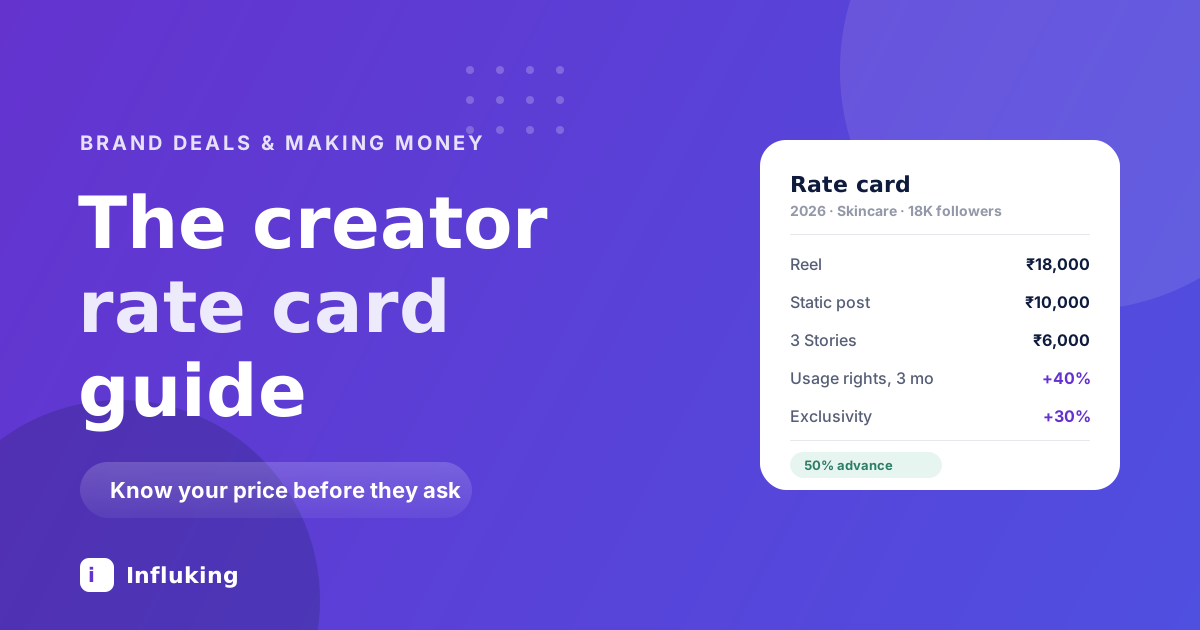
A rate card fixes this. It is a one-page document listing what you charge for each deliverable, so the answer takes ten seconds instead of two days of second-guessing. This guide covers what goes on it, how to arrive at the numbers, and what to charge extra for.
What a rate card is
A rate card is your price list. One page, usually a PDF, sometimes just a section in your media kit. It lists your deliverables, what each costs, and the terms attached, such as how many revisions are included and when you expect to be paid.
It is a starting point for a conversation, not a legal document. Brands expect to negotiate around it, and package deals almost always come in under the sum of the line items. What the card does is anchor the discussion at a number you chose calmly, rather than one you invented under pressure.
What to put on it
- Your name, handle and niche. One line at the top so the file makes sense on its own three weeks later.
- Audience snapshot. Follower count, engagement rate, average Reel views, and the main age, gender and location split. Numbers justify the prices below them.
- Deliverables and prices. Each format on its own line: Reel, static post, carousel, Story set, YouTube integration, whatever you actually make.
- Add-ons. Usage rights, exclusivity, extra revisions and rush delivery, each with its own price or percentage.
- Package options. Two or three bundles at a small discount, because bundles raise the average deal size.
- Terms. Advance percentage, payment window, number of included revisions, and how long the quote holds.
- Date. Put the year on it. It signals that prices change, which makes raising them later a non-event.
Keep it to one page. A brand manager comparing five creators will not read two.
How to work out your base rate
There is no official price list in this industry, which is why everyone feels like they are guessing. Three methods get you to a defensible number, and it is worth running all three.
1. The follower benchmark
The common starting point in India is a few hundred rupees per thousand followers for a single in-feed post, so a creator with 20,000 followers might start around 10,000 to 20,000 rupees. Treat this as a floor to sanity-check against, not an answer. It ignores engagement, niche and effort, which are the things that actually move the price.
2. The views method
This one is better, because brands increasingly buy views rather than followers. Take your average Reel views over the last ten Reels and price per thousand views. Rates vary widely by category, but pricing off real views protects you when your reach is much higher than your follower count, which is common now.
3. The time and value method
Add up the hours a deliverable actually takes, including concept, shoot, edit, revisions and the messages back and forth. Multiply by an hourly rate you would accept for freelance work, then add a premium for the audience access you are selling, which is the part a video editor cannot provide. If this number is far above the other two, your content is expensive to make and your prices should reflect it.
Take the highest of the three and use it as your Reel price, then set everything else relative to that. If you want benchmark ranges to check your number against, our post on how much influencers should charge breaks them down by follower tier.
Pricing each deliverable
Once one number is fixed, the rest follow a rough hierarchy. Video costs more than stills because it takes longer and performs better. Permanent content costs more than content that disappears.
- Reel or short-form video. Your anchor price, the highest single item on most cards.
- Carousel. Roughly 60 to 70 percent of a Reel. Real work, no editing timeline.
- Static post. Around half a Reel.
- Story set of three frames. Around a third of a Reel. Price the set, never the individual frame.
- YouTube integration. Priced separately and usually much higher, since the content keeps earning views for years.
- Content only, no posting. When a brand wants footage for their own channels and you never post it, charge for production plus full usage. This is often more than a normal post, not less.
What to charge extra for
This is where most creators leave money behind. The post is rarely the whole ask.
- Usage rights. If the brand wants to reuse your content on their own channels or in paid ads, that is a separate licence. A common approach is to add 30 to 50 percent for three months, more for a year, and to price perpetual rights very high because you can never sell that content again.
- Exclusivity. Agreeing not to work with competing brands blocks your income. Charge 20 to 50 percent depending on how broad the category is and how long the lock lasts. "No other skincare brand for six months" costs far more than "no other brand of face wash for one month".
- Whitelisting. Running ads from your handle means the brand borrows your identity and your audience data. Price it as a monthly fee on top of the content.
- Extra revisions. Include two, then charge for further rounds. This single line prevents endless feedback loops.
- Rush delivery. Anything under a week gets a 25 to 50 percent premium, because it displaces other work.
- Scripted or heavily controlled content. A brand-written script with locked shots takes longer and performs worse, so it costs more.
- Travel and props. Billed separately at cost, agreed in advance.
Write these as line items even if you often waive them. Showing the price and then discounting it is worth more than never mentioning it at all.
Adjust for the things a formula misses
Two creators with identical follower counts should not charge the same. Push your rates up when your engagement is well above the norm for your size, when your niche has high purchase value like finance, tech or luxury, when your audience sits in a market brands pay more to reach, or when your production quality is genuinely better than the alternatives.
Be more flexible when you are building your first portfolio pieces, when the brand is a long-term partner giving you steady work, or when you would genuinely have bought the product anyway. Flexible is not the same as free. Even a discounted deal should have a number attached so the brand knows what it saved.
How to send it
Do not lead with the rate card. Ask about the campaign first: what deliverables, what timeline, whether they need usage rights, whether exclusivity is involved. You cannot quote a price for an unknown scope, and the questions make you sound like a professional rather than a hopeful.
When you do send it, send the PDF with a short note naming the specific package that fits their brief. Give the number without apologising for it and without padding it with explanation. "For one Reel and three Stories with one month of usage, that comes to X" is a complete sentence. The silence after it is not your problem to fill.
If a brand says the budget is lower, do not just cut the price. Cut the scope. Drop a deliverable, shorten the usage window, remove exclusivity. Lowering the price while keeping the same work teaches every brand that your card is decorative.
When to raise your rates
Review your card every quarter, and raise it when the reality behind it has changed: your reach grew meaningfully, your engagement improved, you are turning work away, or you have results to point to from past campaigns. Results are the strongest argument you have. "The last brand I worked with saw 400 clicks and sold out the shade" beats any follower number.
Apply new rates to new enquiries, keep existing quotes honoured, and tell repeat clients before their next booking rather than surprising them with an invoice. Nobody objects to a rate rise they heard about in advance.
Rate card mistakes
- Not having one. Every DM becomes a fresh negotiation you are unprepared for.
- Pricing only on followers. Views, engagement and niche matter more, and follower-only pricing usually undercharges good accounts.
- Giving usage rights away free. The most common expensive mistake. Ad reuse is worth more than the post.
- Quoting before you know the scope. You will quote for a Reel and be asked for a Reel, three Stories, raw files and six months of ad rights.
- Explaining and justifying the price. State it, then stop typing.
- No advance. Ask for 50 percent up front, or use a platform that holds and releases the payment for you.
- Never updating it. A two-year-old card means two years of pricing yourself as a smaller creator.
Getting paid, not just quoted
A rate card only matters if the money arrives. Put the terms in writing before you shoot: deliverables, timeline, usage window, fee and payment date. Chasing an invoice for three months is the part of this job nobody warns you about.
Influking handles that side for creators, running the brief, approvals and payment through one place so the agreed rate is the rate that lands in your account. If you are still working toward your first deal, start with our guide to landing your first paid brand collaboration, and make sure your personal brand makes the price make sense before anyone opens the card.
Build the card this week, even if the numbers feel high. You will negotiate down from them far more often than you would ever have negotiated up from a guess.