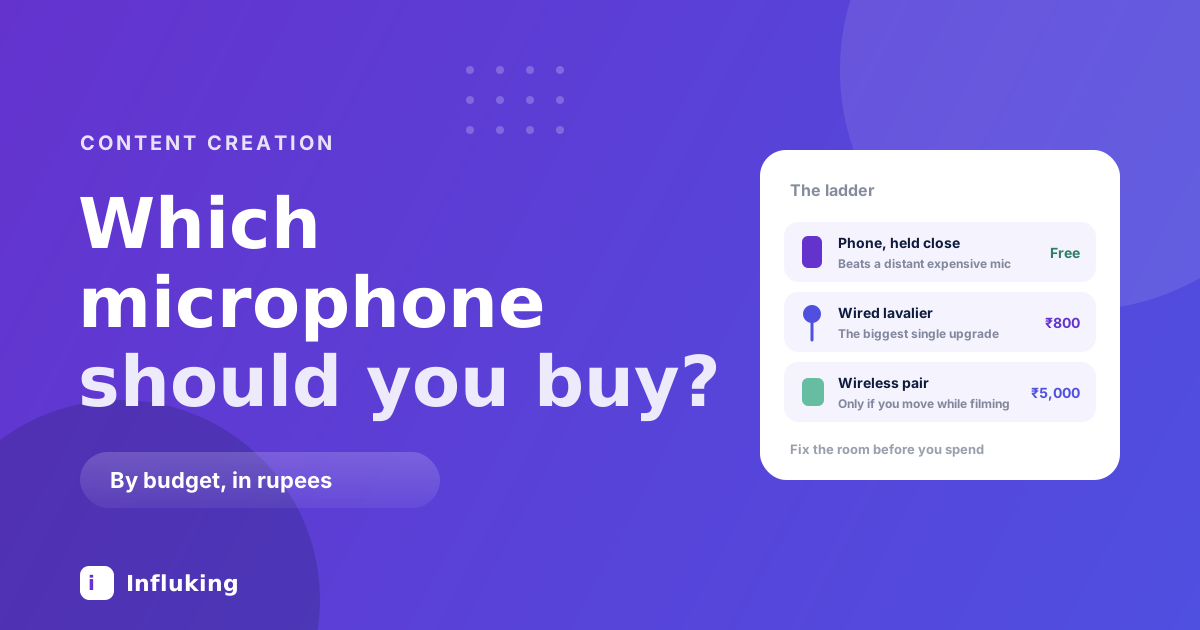
Two things beat buying a microphone, and both are free. Halving your distance to whatever is recording roughly doubles your voice relative to the room, and recording somewhere with soft furnishings removes echo that no microphone can fix afterwards. The audio guide covers both properly, and doing them costs nothing.
Once you have done that and still want better sound, the question becomes which type rather than which brand. Types have jobs. Brands come and go.
Your phone, held close
Cost: free. A modern phone microphone at 30cm sounds better than a mid-range microphone across a room. If you are filming handheld or talking towards the phone, you may not need anything.
Where it fails is when the phone has to be far away, which is most tripod filming. That is the actual reason to buy something.
Wired lavalier
Around ₹600 to ₹1,500. The best value upgrade in creator audio by a distance. It clips to your collar, so the microphone is always 20cm from your mouth regardless of where the camera is.
Buy one with a long cable, three metres or more, or you have solved nothing about camera distance. Check the connector matches your phone, and get the right version rather than relying on an adapter that may not pass audio.
Best for: talking to camera on a tripod, seated content, tutorials, anything where you stay in one place.
Downside: a visible wire, and you are tethered.
Wireless lavalier pair
Around ₹3,000 to ₹8,000. A transmitter clips to you, a receiver plugs into the phone. Same closeness as a wired lav with no cable.
Worth it if you move while filming, shoot outdoors, film other people, or record two people at once. Not worth it if you sit at a desk, where a wired lav does the same job for a fifth of the price.
The cheapest wireless sets are often worse than a decent wired lav, since wireless adds ways to fail: interference, battery, dropouts. If your budget only reaches the bottom of the wireless range, buy a good wired one instead.
Downside: batteries to charge, more to forget, more to go wrong mid-shoot.
Shotgun microphone on camera
Around ₹2,000 to ₹10,000. Mounts on the camera or phone rig and points at whatever the lens points at. It rejects sound from the sides, so a room sounds tighter than it would otherwise.
The catch is that it is still as far away as the camera. A shotgun at two metres in a hard-walled room sounds worse than a ₹800 lav on your collar. It shines when you cannot have a wire on the subject, in b-roll, and when filming things rather than people.
Best for: cooking and process content shot from above, product work, anywhere a visible mic would look wrong.
USB microphone
Around ₹3,000 to ₹12,000. Sits on your desk and plugs into a computer or phone. Sounds the best of anything here when you are close to it, and is the right answer for voiceover, podcasts and anything where you are not on camera.
Wrong for filming yourself, because getting close enough for good sound puts a large object in frame or forces you into an awkward position.
Best for: voiceover added in the edit, talking head content where the mic is deliberately in shot, podcasting.
If you record voiceover separately, this is a strong buy, and recording voiceover separately is itself an underrated upgrade because you can do multiple takes without refilming.
What to buy, by situation
- You film yourself on a tripod, indoors, seated. Wired lavalier with a long cable. Stop there.
- You move around or film outdoors. Wireless pair, but buy mid-range rather than the cheapest.
- You film your hands and a work surface. Shotgun, or record voiceover separately with a USB mic.
- You interview people. Wireless pair with two transmitters.
- You are not sure yet. Wired lavalier. It is cheap enough to be wrong about.
Things that matter more than the model
- Wind. Outdoors without a foam or fur cover is unusable audio. The cover costs almost nothing and is the difference between usable and not.
- Placement. A lav should sit about a hand's width below the chin, clipped so clothing does not brush it. Fabric rub ruins more takes than any other single thing.
- Levels. Record so peaks sit well below the maximum. Clipped audio cannot be repaired, whereas quiet audio can be raised.
- Monitoring. Record ten seconds and listen back before shooting everything. Dead batteries and unplugged cables are discovered at the worst possible time.
- The room. Still the biggest variable, and still free to change.
What not to buy
- Very cheap wireless sets. Dropouts and interference make them worse than a wired lav costing a fifth as much.
- A studio condenser for filming. Superb sound, picks up your entire room, wrong tool.
- Anything needing an interface unless you already know you need one.
- A second microphone before treating the room. Soft furnishings and a closer position beat an upgrade almost every time.
Where audio sits in the budget
If you have ₹5,000 to spend on your setup overall, roughly ₹1,000 on a lav and the rest on light will improve your videos more than ₹5,000 on a microphone. Bad audio loses people faster than dim footage, but the fix for bad audio is cheap, so it does not need the whole budget. The lighting guide covers the other side, and the home studio post covers putting both in one corner.
Nobody has ever followed an account because of the microphone. They unfollow because they could not hear it, which is a much lower bar to clear than the gear discourse suggests.