The caption is the last thing most creators write and the first thing that gets skipped. Which is odd, because it is the part of a post that gets people commenting, gets it saved, and makes it findable six months later.
None of this requires being a writer. It requires a structure and about ten minutes.
What captions actually do now
Three jobs, and they matter in different proportions depending on the format.
They start conversations. Comments and replies are real engagement signals, and captions are how you invite them. Video alone rarely prompts anyone to type.
They make posts findable. Instagram indexes caption text, so a caption written in the words people search keeps working long after the feed has moved on. That side is covered in our Instagram SEO guide.
They carry the depth the video cannot. A 20 second Reel cannot hold nuance. The caption can, and that is often what earns the save.
The first line is most of the job
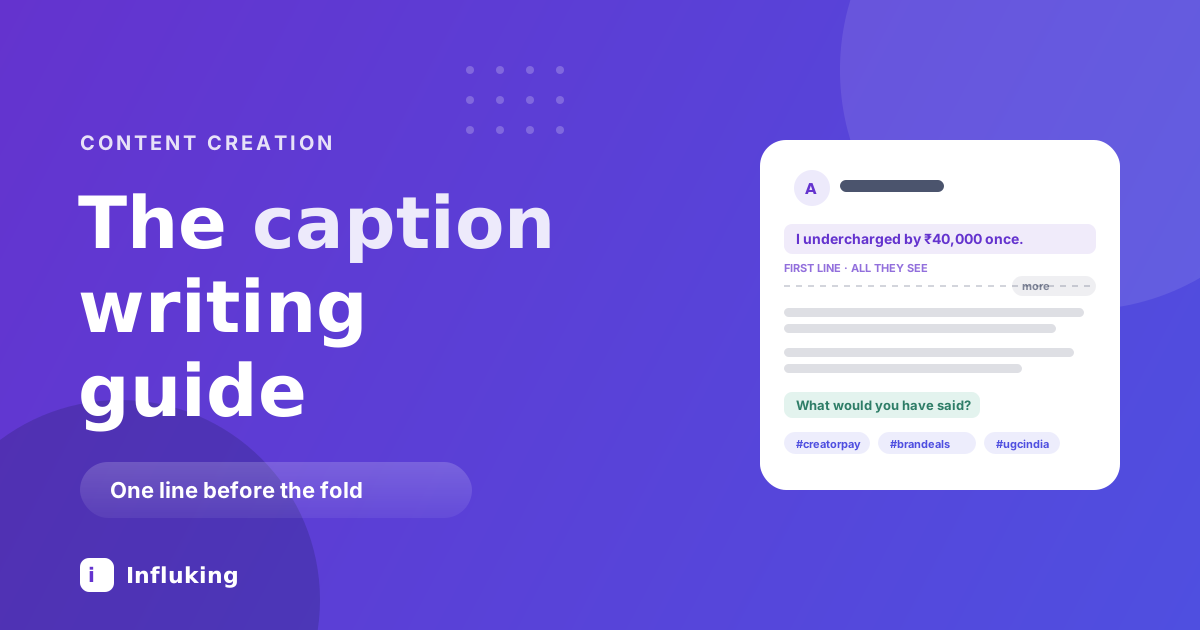
Instagram truncates captions at roughly 125 characters, so almost nobody sees past your first line unless it earns the tap. Treat that line the way you treat a hook: specific, with a gap in it.
Compare "Here's my honest review of this serum" with "I used this serum for 60 days and my skin got worse before it got better." The second one has a reason to keep reading built into it.
Practical rules for line one: no greeting, no "new post up", no restating what the video obviously shows. Lead with the surprising bit, the number, or the mistake. If you are stuck, our hook formulas work as caption openers with almost no adaptation.
A structure that works
- Hook line. One sentence, under 125 characters, doing the work above.
- The body. The context, the detail, the story, or the steps. Short paragraphs, one idea each.
- The turn. One line that tells people what to take away from it.
- A prompt. A question or an instruction that is easy to answer.
- Tags. Three to five relevant ones at the end, after a line break.
Not every caption needs all five. A strong Reel with a clear message might need only the hook line and a question.
How long should a caption be?
It depends on what the format leaves undone.
- Reels: short. One to three lines. The video carries the message, and long captions on Reels mostly go unread.
- Carousels: medium to long. People who swipe through ten slides are in a reading mood, and the caption can extend the point.
- Static posts: whatever the idea needs. This is the format where long-form storytelling still works well.
- Anything with a story: as long as it earns. Length is not the problem; padding is.
The test is whether every line is doing something. If a sentence could be deleted without loss, delete it.
Formatting so people actually read it
- Use line breaks. A wall of text gets skipped. Break after roughly every one or two sentences.
- Front-load each paragraph. The point first, the elaboration after.
- Write short sentences. Phone screens are narrow and attention is thin.
- Emojis as punctuation, not vocabulary. One or two to break up a block is fine. A sentence made of emojis is unreadable and unsearchable.
- Avoid fancy fonts from generator apps. Screen readers cannot read them and Instagram cannot index them.
Prompts that actually get replies
"What do you think?" gets nothing, because answering it requires effort and invention. The prompts that work are specific and cheap to answer.
- Binary choice. "Team morning shoot or team golden hour?"
- Fill in the blank. "The one product I will never repurchase is ___."
- Ask for their number. "How much did you charge for your first brand deal?"
- Ask for a recommendation. People love being useful, and it gives you content ideas.
- Offer something. "Comment TEMPLATE and I will send it over." Effective, and worth using sparingly so it does not become your whole personality.
Then reply to every comment, especially in the first hour. Replies keep the thread alive and are the cheapest engagement you will ever get.
Write like you talk
Read the caption aloud. If it does not sound like something you would say to a person, rewrite it. Captions fail more often from sounding like a brand than from any structural problem.
That means contractions, opinions, and the occasional incomplete sentence. It does not mean rambling. Conversational and tight are compatible.
Five templates to reuse
- The lesson. "I [did the thing] for [time] and here is what nobody mentions." Then three short points, then a question about their experience.
- The correction. "You do not need [expensive thing] to [outcome]." Then what you actually need, then the prompt.
- The breakdown. "This [result] came from three things:" then a short list, then an offer to go deeper if people ask.
- The story. Start mid-scene, one paragraph of what happened, one line on what you learned, one question.
- The straight answer. The exact question people keep asking you, answered in four lines. These are the best-performing captions most creators write, because they were requested.
A check before you post
- Does the first line make sense alone, and give a reason to tap more?
- Would someone who has never seen your account understand it?
- Is there one clear thing to do at the end?
- Are the words in it words someone would actually search?
- Have you deleted every sentence that adds nothing?
- Are the tags relevant and few, as our post on how hashtags work now explains?
Write them in batches
Caption quality collapses when you write at the moment of posting, tired, wanting to be done. Write four captions in one sitting while you are in a writing frame of mind, save them as drafts, and post from the drafts.
Keep a running note of questions people ask you in comments and DMs. Every one of them is a caption, already validated by someone wanting the answer.
Mistakes
- Describing the video. They can see it. Add something.
- Burying the point in line six. Nobody got there.
- Vague prompts. "Thoughts?" is not a question anyone answers.
- Emoji-only captions. No search value, no message, no reason to comment.
- Thirty tags. Dilutes the topic signal and reads as spam.
- Never replying to comments. You asked a question and then left the room.
- Copy-pasted call to action on every post. People stop seeing it after the third time.
Captions are ten minutes of work sitting on top of hours of filming, and they decide whether that work gets saved, discussed or found. Write the first line like a hook, break up the body, ask something easy, and stop when you have said the thing.
The rest of the post matters too: our Reel editing guide covers the video side, and Influking matches creators with brands once the whole package is landing.