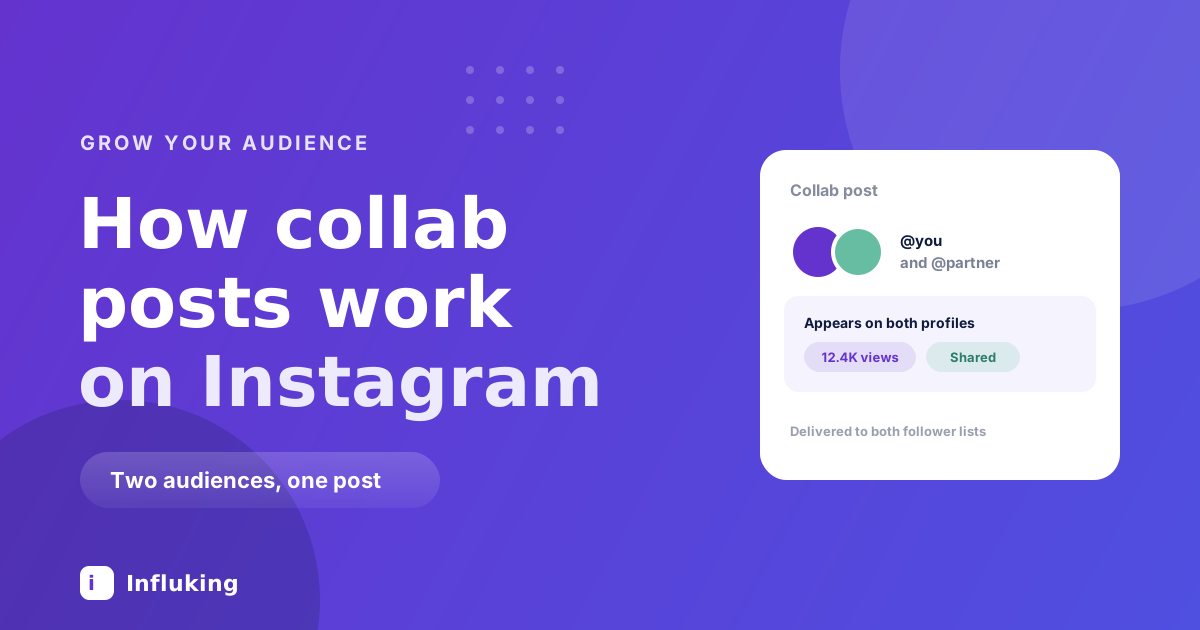
A collab post is an Instagram feature, not a business arrangement. You invite another account as a collaborator, they accept, and the post then lives on both profiles as a single post with shared likes, comments and views. It goes out to their followers as well as yours.
Worth being clear about the word, because "collaboration" usually means a paid brand deal, which is a completely different thing covered in getting your first paid collaboration. This post is about the free feature that puts you in front of someone else's audience.
Why it is the strongest free growth lever
Every other growth tactic asks the algorithm to find people for you. A collab post skips that entirely. It is delivered to a follower list that already exists, by an account those people already chose to follow.
The endorsement is doing the work. A stranger scrolling past your Reel has no reason to trust it. The same Reel appearing under an account they follow arrives with borrowed credibility, and conversion to follows is usually far higher than on a normal post.
It is also one post rather than two. Both accounts get the reach, neither has to make double the content, and the engagement pools into a single number rather than splitting.
How to set one up
- Create the post or Reel as normal.
- On the final screen, tap to tag people, then choose the invite collaborator option rather than a normal tag.
- Search for the account and send the invite.
- They receive a request and the post appears on their profile once they accept.
Only one person uploads. Decide in advance who that is, because whoever posts controls the caption, the cover frame and the audio, and there is no way to hand that over afterwards.
If they decline or never respond, the post stays as a normal post on your account. Nothing breaks, so a failed invite costs you nothing but the reach you hoped for.
Finding the right partner
The instinct is to approach the biggest account that might say yes. That is usually the worst use of your time, because large accounts get dozens of these requests a week and have no reason to accept.
- Similar size, or a little larger. Within roughly two or three times your follower count is where the trade feels fair to both sides. Someone forty times your size is doing charity, and they know it.
- Adjacent, not identical. A budget skincare account and a budget makeup account share an audience without competing. Two accounts posting the same advice are fighting over the same followers.
- Real engagement, not follower count. Check their comments before you care about their number. A partner with 8,000 engaged followers delivers more than one with 60,000 dead ones, which the engagement rate guide explains how to assess.
- Someone whose audience would want you. The test is whether their followers would plausibly follow you after seeing one post. If not, the reach is wasted.
How to pitch it
Most collab requests fail because they ask for a collaboration in the abstract. "Love your content, want to collab?" gives the other person work to do, so they ignore it.
Send a specific idea instead. Name the format, the topic, who films what, and what you will handle. "I will film and edit a 30-second Reel comparing your approach to X with mine, you just send me one clip, and I will post it as a collab" is a proposal someone can answer with one word.
Do the unglamorous half. Offering to shoot, edit and write the caption removes every reason to say no, and the reach is shared regardless of who did the work.
Warm it up first. A week of genuinely useful comments on their posts before you ask changes the response rate more than anything you write in the message.
What makes a collab underperform
- Mismatched audiences. The post reaches plenty of people, none of whom want what you make. Reach without relevance produces followers who never engage again.
- A post that only makes sense to one audience. Inside jokes and references to your own content lose the half of the viewers who came from the other account.
- No reason to follow either account. A collab still has to be a good post. The feature distributes it, it does not make it worth watching.
- Neither profile converts. Both accounts need a clear name field and bio, or the borrowed traffic bounces. That is what the profile checklist is for.
- One-off thinking. A single collab is a spike. A recurring one with the same partner compounds, because the second and third appearances are when their audience starts recognising you.
Collab posts and brand deals are different
A brand paying you to post will sometimes ask to be added as a collaborator so the post appears on their page too. That is a deliverable with a value, and it belongs in your pricing rather than being thrown in free.
Being tagged as a collaborator gives the brand a permanent post on their own profile plus your engagement attached to it. If a brand asks for it, treat it as an extra line on the rate card rather than a courtesy.
What to measure
Look at follows gained rather than views. A collab that reached 80,000 people and produced 40 follows tells you the audiences did not match, however good the view count looks.
Compare the follows-per-reach figure against your normal posts. If a collab beats your average, that partner and that format are worth repeating. If it does not, the problem is usually the pairing rather than the feature.
Collab posts are the one growth tactic where the ceiling is set by who you know rather than by the algorithm. Building three or four regular partners at your own level does more over a year than one lucky post, and those relationships tend to turn into the paid work later.