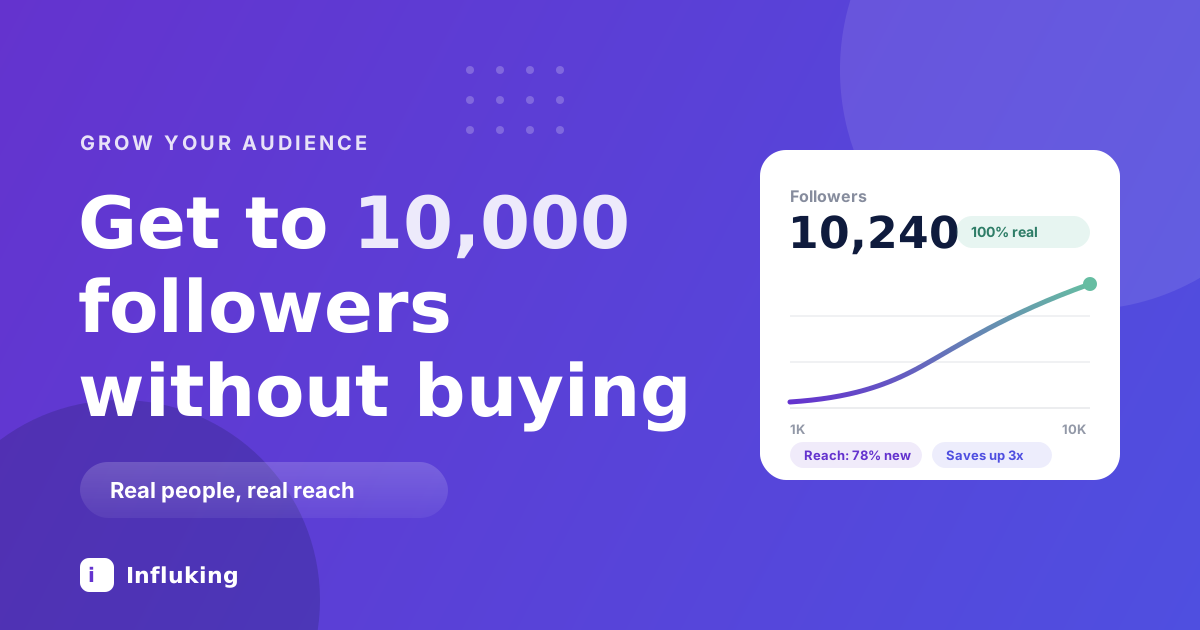
You can buy 10,000 followers for less than the price of dinner. Plenty of people do it, then wonder why their posts get 40 likes, why brands stop replying, and why the account never recovers. It is the one shortcut in this industry that actively makes your situation worse.
Real growth to 10,000 is slower and completely doable. It runs on two things: content that reaches people who do not follow you yet, and a profile that turns those strangers into followers. Everything below is one of those two jobs.
What buying followers actually does to you
The damage is mathematical, not moral. Your engagement rate is engagement divided by followers. Add 9,000 accounts that will never like anything and you have divided by a much bigger number, so your rate collapses. Instagram reads low engagement as low quality and shows your posts to fewer real people, which means the purchase costs you reach you already had.
It also fails the only audit that matters. Every brand and every platform runs follower-quality checks now, and fake followers are obvious: no profile photos, accounts from countries your content is not in, follower counts that jump 4,000 in a day. A creator with 2,000 real followers gets the deal. One with 30,000 bought ones gets quietly filed away.
The same goes for the softer versions. Follow-for-follow, engagement pods and giveaway accounts all bring you people who wanted something other than your content, and they behave exactly like fake followers do in your analytics.
The shift that happens after 1,000
Getting your first 1,000 followers is mostly about consistency and telling people you exist. Getting to 10,000 works differently, because you can no longer reach that many people through your existing audience.
From here, growth comes almost entirely from non-followers. That means your job changes from posting for the people who already like you to making things that survive being shown to a stranger with no context. Those are different skills, and the second one is where most accounts stall for a year.
Split your content into two jobs
Every post should be doing one of two things, and you should know which before you make it.
Reach content is built for people who have never heard of you. It is broad within your niche, understandable in three seconds, and answers a question lots of people have. This is what brings new followers.
Retention content is for the people already there. Your face, your opinions, behind the scenes, in-jokes, the stuff that makes them stay and eventually buy something. This rarely reaches anyone new, and that is fine.
A workable mix while you are growing is roughly two reach posts for every retention post. Accounts that post only reach content grow a following that feels nothing for them. Accounts that post only retention content stay the same size for years.
What actually pulls new followers
Reach on Instagram now runs through Reels and through saves and shares. A few formats do the work reliably:
- The specific how-to. One problem, one answer, under 30 seconds. "How to fix a shirt collar that keeps folding" travels further than "my morning routine".
- The mistake post. "Five things I got wrong in my first year of freelancing" gets saved, because saving feels like fixing the problem later.
- The comparison. This versus that, with a clear verdict. People argue in the comments, and arguments are reach.
- The result. Before and after, with the method. Proof is the most shareable thing you own.
- The series. Same format, same opening line, numbered. Series train people to follow, because they know what episode two looks like.
The series is the underrated one. A single good Reel gets views. A recognisable recurring format gets follows, because following is how someone makes sure they see the next one.
All of this depends on the edit holding attention past the first second, which is worth getting right before you worry about anything else. Our Reel editing guide covers the hook, the pacing and the export settings.
Turn views into follows
Here is where most accounts leak. A Reel gets 50,000 views and brings in 60 followers, and the creator blames the algorithm. The algorithm did its part. The profile did not.
When a stranger likes your Reel, they tap your name and give you about three seconds to answer one question: will this account give me more of what I just enjoyed? Make that answer obvious.
- Name field. Put your topic in it, not just your name. That field is searchable, and "Priya | budget skincare" tells people what they are getting.
- Bio. Who you help and what you post. Skip the quotes and the emoji ladder.
- The top of your grid. Whatever sits in the first row is your shop window. If your best-performing format is not visible there, pin it.
- Consistency of look. Same caption font, same colour treatment, same framing. It reads as "there is more like this here".
Check your own conversion rate: divide new followers by reach for each Reel. Once you know your usual number, a post that beats it tells you exactly which content to make more of.
Borrow other people's audiences
The fastest non-paid growth lever at this stage is appearing in front of an audience someone else built.
Collab posts, where a Reel goes out on both accounts, put you in the feed of everyone who follows the other creator. Look for accounts around your size or a little larger in an adjacent niche rather than a competing one, and pitch a specific idea rather than asking to collaborate in the abstract.
Commenting works too, though slowly and only if you are useful. Leave genuinely good replies on posts from bigger accounts in your niche, early, before the comment section fills. People do click through from a comment that taught them something.
Being a guest on small podcasts, appearing in someone else's video, doing a shared live: all versions of the same idea. Borrow, do not wait.
How often to post
Four to five Reels a week is roughly what an account growing at this stage looks like, plus Stories most days to keep the existing audience warm. If four is not sustainable for you, three you can hold for a year beats five for six weeks and then nothing.
Batch the filming. Editing four Reels in one sitting takes less time than editing four Reels on four days, and the decision fatigue of "what do I post today" is what actually ends most accounts.
Repost your best performers after a few months too. Most of your audience never saw them, and a Reel that worked once usually works again.
Read the numbers that matter
Follower count is a lagging indicator. These tell you what is happening now:
- Percentage of reach from non-followers. Below about half means your content is circulating among people who already know you, and growth will be slow.
- Follows per Reel. The single most useful number for growth. Rank your last 20 Reels by it and you have your content plan.
- Saves and shares. Both push distribution harder than likes. Shares in particular mean someone put your content in a private conversation, which is as strong a signal as you can get.
- Retention graph. A cliff in the first three seconds is a hook problem, not a topic problem.
Look at these monthly. Daily checking tells you nothing except how anxious you are.
How long it takes
With consistent posting and content that reaches non-followers, a year is a realistic run from 1,000 to 10,000. Some accounts do it in three months because one Reel travels; plenty take two years. Growth is lumpy rather than linear, so expect long flat stretches broken by a post that suddenly brings 2,000 people in a week.
The flat stretches are where people buy followers. They are also the stretches where the work compounds, since the back catalogue keeps getting surfaced long after you posted it.
Mistakes that stall accounts at 3,000
- Follow-for-follow and pods. They inflate the number and depress the rate, which is the worst possible trade.
- Giveaways for follows. You attract people who wanted a free thing, and most unfollow the week after.
- Changing niche every few months. The algorithm loses track of who to show you to, and so does your audience.
- Only posting retention content. Comfortable, and the reason a lot of good accounts stay small.
- Ignoring the profile. Fixing the bio and the first row is a one-hour job that improves every future post.
- Judging a Reel after an hour. Reels get picked up days later now. Give them a week before you decide.
10,000 is where it starts paying
The number matters less than what comes with it: enough reach to be found, enough proof to be believed, and enough of an audience for brands to care. Real followers in a clear niche is exactly what brands filter for, which is why 10,000 genuine followers earns while 40,000 bought ones do not.
When you get there, have your prices ready with our rate card guide, and let Influking match you with brands running campaigns in your category rather than waiting for the DMs to arrive.
None of this is a secret, which is sort of the point. Post for strangers, make your profile answer their question in three seconds, borrow other audiences, and keep going through the flat months. That is the whole method, and it is the only one that leaves you with an account worth having at the end.