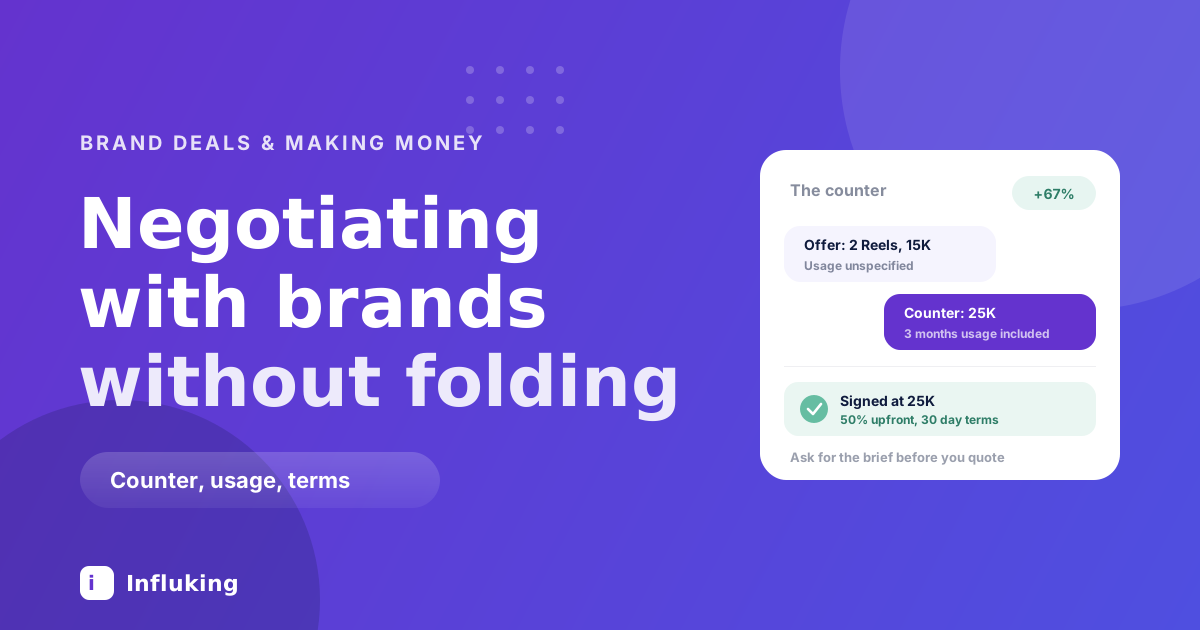
Most creators lose money after the price is agreed, not while agreeing it. The fee looks fine, then the brand wants the content for their own ads for a year, wants you not to work with anyone similar for six months, adds a second Reel during revisions, and pays ninety days later.
Knowing what to charge is a separate problem, and it is solved before the conversation starts. This is about the conversation.
Do not name a number first
When a brand opens with "what are your rates?", answering immediately is the most expensive reflex in this business. You do not yet know what they want, and any number you give becomes a ceiling you will spend the rest of the thread defending.
Reply with the brief request instead. Something like: happy to share rates, could you tell me the deliverables, where the content will be used and for how long, and whether there is exclusivity, then I will send a proper quote.
This does two things. It gets you the information you need to price properly, and it signals that you have done this before, which changes how the rest of the exchange goes.
If they push and insist you go first, give a range tied to scope: "one Reel with organic use only starts at X, and it moves depending on usage and exclusivity." A range with conditions is not a commitment.
The questions to ask before quoting
- Exactly what deliverables? One Reel, three Stories, a static post? Vague briefs become more work later.
- Where will it be used? Your channel only, or their channel, website, email, paid ads, in-store?
- For how long? Usage is priced per period. Perpetual is not a small ask.
- Is there exclusivity? Which category, and for how long after posting.
- How many rounds of revisions? Unlimited revisions is unlimited work.
- What is the timeline? A shoot in four days is worth more than one in four weeks.
- Who signs off, and when? Approval by committee doubles the effort.
- What are the payment terms? Ask early, not after signing.
Sending eight questions feels aggressive the first time. It is normal, and any brand used to working with creators will answer them without blinking. A brand that will not answer them is telling you something.
The four things that actually move the price
Creators tend to negotiate the fee and give the rest away, when the rest is often worth more than the fee.
- Usage rights. Posting on your own feed is one thing. The brand running it on their channels, website or email is another, and it should be priced as a separate line for a defined period. Perpetual, all-media usage is the most expensive thing on any contract and is regularly requested as though it were free.
- Paid amplification. If they want to put money behind the post, or run it from their own account as an ad using your handle, that is materially different from an organic post. It is usually priced as a percentage uplift on the fee for a defined spend and window.
- Exclusivity. Agreeing not to work with competitors blocks future income. Price it by how long and how broad the category is. "No other skincare brands for six months" costs you far more than "not this specific competitor for thirty days".
- Timeline. Rush work is worth more. If they need it inside a week, that is a premium, and saying so is normal in every other freelance field.
Each of these belongs as a separate line item, which is also what makes a counter easy to justify. The rate card guide covers how to structure them.
How to counter
A counter that is just a bigger number invites a fight. A counter that explains what the number buys invites a decision.
The structure that works: thank them, restate the scope as you understand it, give the figure, break it into lines, and offer one alternative at a lower price with less scope.
That last part matters more than anything else here. Giving them a choice between two options rather than a yes or no changes the question from "will we pay this?" to "which of these do we want?". Make the cheaper option genuinely smaller, not a discount, or you have just taught them your first number was inflated.
Send it as a short email with the lines laid out. Numbers in a paragraph get misread, and numbers in a list get approved.
The standard lines, and what to say
"We do not have budget for this." Sometimes true. The reply is to shrink the scope, not the price: "I understand. For that budget I could do one Story frame with organic usage only, which keeps it workable for both of us." If they wanted a Reel and get offered a Story, budget frequently reappears.
"This will be great exposure." Exposure from a brand with fewer followers than you is not exposure. Decline warmly and specifically: "I keep a couple of slots for collaborations I am personally excited about, and I would want this to be a paid one."
"Other creators your size charge less." Possibly. The answer is not to justify your rate against theirs but to point at what you deliver: your engagement rate, your audience match, your previous results. This is what the media kit exists for.
"This is our standard rate, we cannot change it." Rates are often fixed while scope is not. If the fee cannot move, move the deliverables, shorten the usage period, or narrow the exclusivity until the trade is fair.
"Can you send a discounted rate for a long-term partnership?" Reasonable, but only against a committed volume in writing. A discount for a promised future that never arrives is just a discount.
Gifted collaborations
Barter is worth taking when the product is something you would have bought, when you are early and genuinely need portfolio pieces, or when the brand is one whose name opens doors later.
It is not worth taking when they want usage rights, exclusivity or a specific posting schedule, because at that point it is work with no fee attached. A useful rule: gifted means you post if you like it, on your timeline, with no rights transferred. The moment any of those conditions appear, it is a paid job being described differently.
Scope creep after you agree
The second most common way creators lose money. Revisions arrive with new requirements, a Story gets added, they ask for the raw files.
The fix is not confrontation, it is a sentence: "Happy to do that. It falls outside what we agreed, so I will send a small addendum for it." Almost nobody argues with that, and almost everybody keeps asking if you do it for free once.
Raw footage deserves its own mention. Handing over unedited files means they can recut your content forever. If they want the raws, that is a separate negotiation and usually a substantial one.
Payment terms, which nobody reads
- Ask for part of the fee upfront. Fifty percent is normal for new clients. It filters out the brands that were never going to pay.
- Agree the payment window in writing. Thirty days from invoice is reasonable. Sixty is common with larger companies. Ninety should be pushed back on.
- Tie payment to delivery, not to their campaign schedule. "Payable on publication" leaves you unpaid if they delay the launch by two months.
- Get the invoicing details before you deliver. Purchase order numbers and vendor onboarding are how a thirty-day term quietly becomes ninety.
- State a late fee. You may never charge it. It changes how the invoice is treated.
Two things specific to India. Confirm whether the agreed figure is inclusive or exclusive of GST, because assuming the wrong one costs you the difference. And expect tax to be deducted at source before payment lands, so the amount in your account will be lower than the invoice; that is reclaimed when you file, but it affects your cash flow if you were not expecting it. Rates and thresholds change, so check the current position with an accountant rather than a blog post.
Clauses worth reading properly
- The usage clause. Check the media listed and the duration. "In perpetuity, across all media" is the line to push back on.
- Exclusivity scope. Look for categories defined so broadly they block unrelated work.
- Approval rights. Unlimited approval rounds with no deadline means the job never ends.
- Content removal. Some contracts require you to keep the post up for a period. Fine, if it is defined.
- Morality clauses. Common and usually reasonable, but read what triggers them.
- Being added as a collaborator. If they want the post on their profile too, that is a deliverable, as covered in collaboration posts.
When to walk away
Walking away is a negotiating position, and it only works if you are willing to use it.
Leave when the fee will not cover the hours at any rate you would accept, when they want perpetual usage at an organic-post price, when the exclusivity blocks more income than the deal provides, or when the brand is one your audience would think less of you for. The last is the one people underestimate, because a bad fit costs you trust that took a year to build.
Decline in a way that leaves the door open. Brands change budgets, and the person emailing you moves to a bigger company. "This one is not the right fit for me at the moment, but I would genuinely like to work together, so please keep me in mind for the next campaign" costs nothing and pays off surprisingly often.
Negotiating is mostly asking questions before giving numbers, and pricing the things that are not the fee. Neither requires confidence you do not have yet, only a checklist you follow every time. If you would rather have the terms handled for you, Influking runs the brief, the approvals and the payment schedule as part of the match rather than leaving you to chase an invoice.