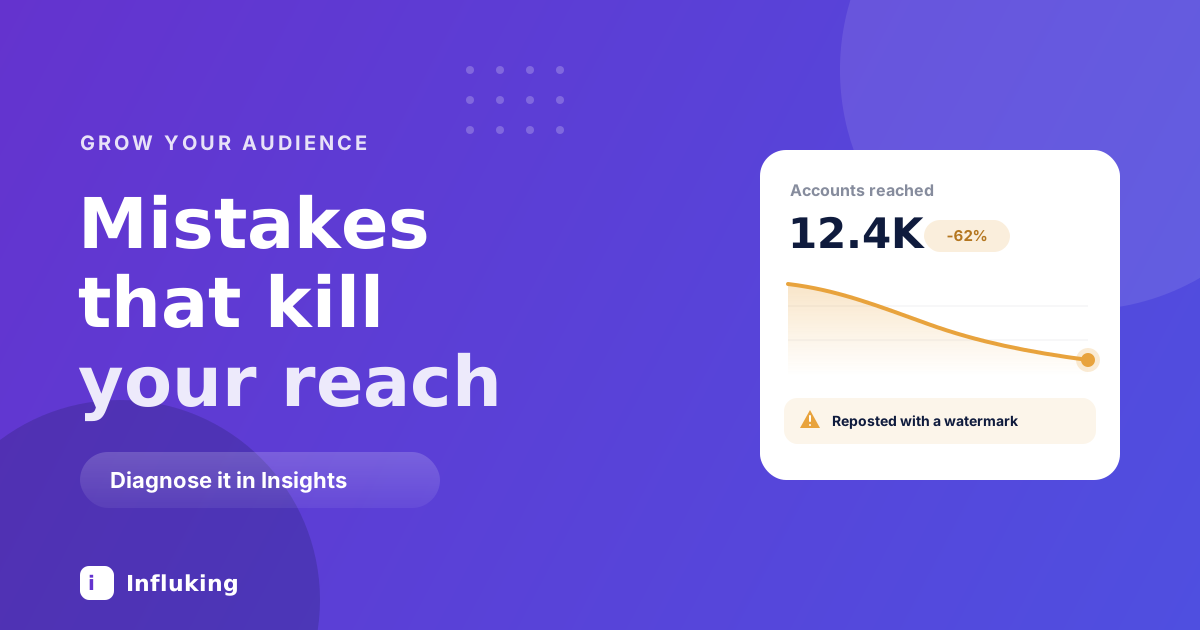
Reach drops and the first thing everyone does is search for the word shadowban. Then they change the posting time, cut the hashtags, delete a post, switch to a new audio, and post twice as often for a week. Something recovers eventually and they have no idea which change did it.
Most reach problems have one cause you can name. A few of them are policy problems, most are content problems, and a couple of the things people blame are not happening at all.
Check Account Status before you theorise
Instagram will tell you directly whether it has restricted your content. Go to Settings, then Account, then Account Status. It shows whether your posts are eligible to be recommended to people who do not follow you, and lists anything that has been flagged or removed.
If that page says your content is not eligible for recommendation, you have found your answer and none of the content advice below is your problem yet. You can usually request a review from that screen. If it says everything is fine, stop looking for a ban and start looking at your posts.
Worth checking first because it takes thirty seconds and it rules out the explanation everyone jumps to.
Reposting video with another app's watermark
This is the most common self-inflicted one. Exporting from TikTok with the logo burnt in, or from any editor that stamps its name on the corner, gets the video down-ranked for recommendation. Instagram has said this openly and it applies to the visible watermark, not to the fact that you posted elsewhere first.
Cross-posting is fine. Export a clean file without the watermark, or save the original before it gets stamped. If your whole feed is recycled watermarked video, that alone can explain a reach collapse across the entire account.
Low-resolution uploads and heavily compressed re-encodes sit in the same bucket. The Reel editing guide covers export settings that survive Instagram's own compression.
Engagement bait
"Like if you agree", "tag three friends", "comment YES for the link". Meta treats this as engagement bait and demotes it as policy rather than as a side effect. It has been detectable automatically for years.
The tricky part is that a genuine question and bait look similar from a distance. The difference is whether the request is about the content. Asking which of two approaches your audience uses is a real question. Asking people to tag friends for no reason is a toll you are charging for the post.
Wandering off your subject
Instagram builds a model of what your account is about and who wants it. Post consistently on one subject and it gets good at finding those people. Post a travel vlog, then a recipe, then something about your car, and the model breaks down. Distribution goes to the wrong audience, they scroll past, and the post reads as weak content.
This is the slow killer, because nothing looks wrong on any individual post. Reach just grinds downwards over a couple of months. If your last twenty posts do not obviously belong to the same account, that is likely your cause. Working from a content bank built around one subject makes the drift much harder to fall into.
Trend-chasing outside your niche is the fast version of the same mistake. The trending audio brings people in, none of them want what you actually make, and your next few posts land on an audience that has already lost interest.
Losing people in the first second
Reels reach is downstream of retention. If most viewers leave before second two, Instagram stops showing the video, and no amount of hashtags or timing changes that.
Open your retention graph. A cliff at the start is a hook problem, and it is fixable in the edit rather than by reshooting. A steady slope with no cliff means the hook worked and the middle is slow. The hook formulas guide has the templates, and it is the highest-leverage thing on this page if your Account Status is clean.
Making video that only works with sound on
A large share of Reels get watched on mute, at least for the first few seconds. If your video is you talking with no captions and no text, those viewers leave immediately, retention tanks, and reach follows.
Burn in captions. Put the point on screen as text in the first second. Then treat the audio as the thing that keeps people once they have stayed, which the audio guide goes into.
Automation, pods and bought engagement
- Mass following and unfollowing. Aggressive follow cycles trigger action blocks, and a blocked account cannot do the thing that was growing it.
- Engagement pods. The same twenty accounts on every post is a pattern, and it teaches the algorithm your content appeals to twenty people.
- Bought likes and comments. Interactions from accounts with no posts and no followers are worth nothing as a ranking signal and actively distort what you can learn from your own data.
- Bulk DM tools. Sending the same message to hundreds of accounts gets reported, and reports affect account standing.
All four inflate a number while lowering the rate that number is judged by. The engagement rate guide covers why that trade is always bad.
Hashtag habits that do nothing
Hashtags are a weak topic hint now rather than a distribution lever, so most hashtag mistakes cost you very little. Two still matter.
Using tags that have been restricted for policy reasons can suppress an individual post. These change constantly and are not published, so the practical defence is to use specific tags related to your actual subject rather than broad ones scraped from a list.
The other is mismatched tags. Tagging a post with whatever is popular rather than what the post is about tells Instagram the wrong thing about your content, which feeds back into the wandering-off-subject problem. Our hashtags guide covers what they still do.
What is not killing your reach
- Editing the caption after posting. No evidence for this. It is one of the most durable myths in the creator world.
- Posting an hour later than usual. Timing has a small effect on the first wave. Reels get resurfaced for days now, so an hour either way is noise.
- Using too many hashtags. There is no penalty for a number under the limit. Thirty broad tags is ineffective rather than punished.
- Taking a break. There is no gap penalty. Reach falls after a break because you have fewer recent posts in circulation, and it comes back when you post again.
- Deleting and reposting a slow post. This actively hurts. You throw away the signals the post had accumulated, and Reels often get picked up days later.
- A single bad post. One weak Reel does not poison the account. A run of twenty does.
Working out which one is yours
- Check Account Status. If content is not eligible for recommendation, deal with that and stop.
- Look at the share of reach coming from non-followers. If it collapsed, this is a distribution problem. If it held steady and only follower reach fell, your existing audience stopped caring.
- Open the retention graph on your last five Reels. A cliff in the first two seconds means the hook, not the algorithm.
- Scroll your own grid as a stranger would. If you cannot say what the account is about in one line, neither can Instagram.
- Check for watermarks on anything cross-posted.
- Change one thing, then give it two weeks. Reels keep accumulating reach for days, so judging after an afternoon tells you nothing.
That last point is where most diagnosis falls apart. Changing five things at once means that when reach recovers, you have learned nothing and will be back here in three months.
Reach problems feel personal, as though the platform has singled you out. Almost always it is the ordinary version: recycled video with a logo on it, or twenty posts that do not agree on what the account is about. The algorithm guide covers what the ranking systems are actually optimising for, which makes most of these easier to spot before they cost you two months.