There are two reasons to rebrand. The account is aimed at the wrong people, or you have outgrown what you set it up to do. Everything else is usually boredom, and boredom is a terrible reason to reset the trust you have built.
The test is whether you can name the problem in one sentence. "My audience wants budget content and I want to make premium content" is a reason. "It feels stale" is not.
When a rebrand is genuinely needed
- You are attracting the wrong audience. High reach, low conversion to anything that matters. Brands in your category do not approach you because your followers are not their customers.
- The niche was too broad from the start. A lifestyle account that could be about anything, so the algorithm cannot place it and neither can a stranger.
- You have genuinely changed direction. Not for a month. Six months of wanting to make something different.
- The name no longer fits. A handle tied to a city you left, an age you passed, or a job you quit.
- You are selling something the audience will not buy. The most expensive mismatch, because it caps income regardless of follower count.
If none of these apply, the problem is more likely your content than your brand, and a content bank fixes that more cheaply.
What a rebrand actually is
People imagine new colours and a new logo. Those matter least. In order of impact:
- The promise. What someone gets by following. This is the rebrand, and everything else is decoration on top of it.
- The content pillar. What you actually post about week to week.
- The name field. Searchable, and the thing that tells a visitor what the account is in three seconds.
- The bio. Who you help and how.
- The grid. What the top nine posts communicate.
- The handle. Only if it actively misleads.
- The visual identity. Last, and least urgent.
Changing the colours without changing the promise is the most common version of this, and it achieves nothing.
Narrow, do not widen
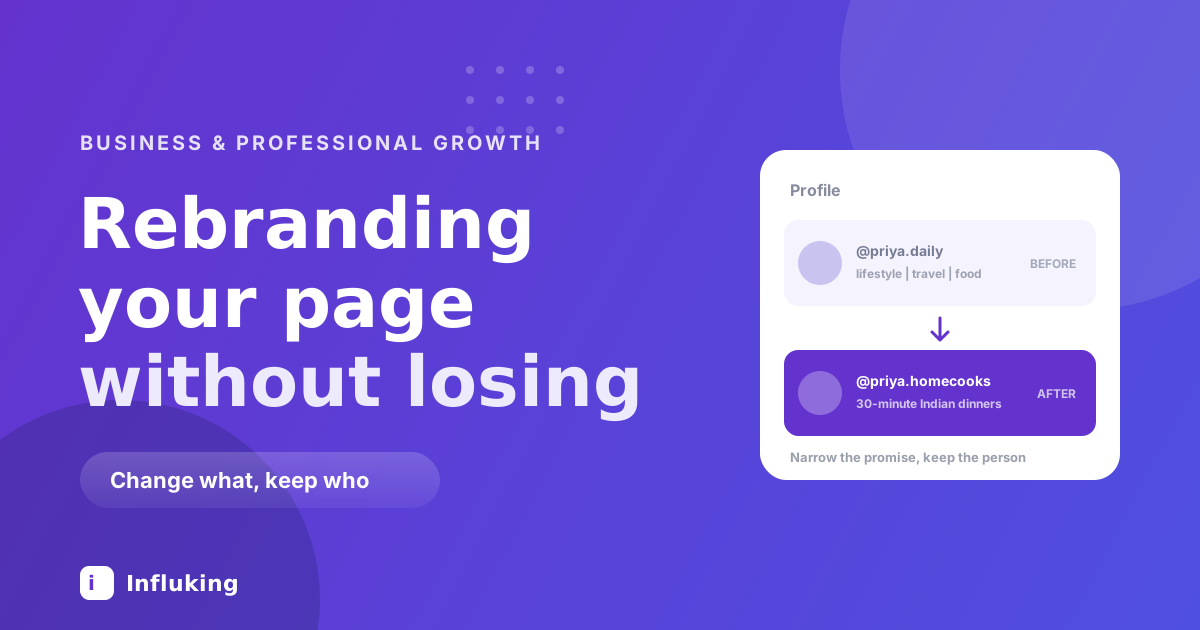
Almost every successful rebrand narrows. "Lifestyle" becomes "30-minute Indian dinners". "Fitness" becomes "strength training for people over 40".
Widening feels safer because it seems to keep everyone, and it does the opposite. A broader promise means the algorithm has less to work with and a stranger has less reason to follow. If you are rebranding because growth stalled, narrowing is almost always the answer, which is the same logic as choosing a niche in the first place.
Hard cut or gradual shift
A gradual shift works when the new direction is adjacent. Change the ratio over eight to twelve weeks, adding more of the new and less of the old, and update the profile once the new content is clearly the majority. Engagement dips less and the audience adjusts without noticing much.
A hard cut is right when the new direction is unrelated, or when the old content would confuse someone arriving today. Announce it once, change everything in a week, and accept a visible drop while the algorithm relearns who to show you to.
The mistake is a hard cut on the profile with a gradual cut on the content, so the bio promises one thing and the grid shows another. Visitors bounce, and the profile stops converting entirely.
What to expect
Reach usually falls for four to eight weeks. Instagram had a model of who wanted your content and you invalidated it, so it starts testing again. This is normal and it is the actual cost of a rebrand.
You will lose followers. The ones who leave were following for something you have stopped making, and their disengagement was already dragging your engagement rate down. A smaller, better-matched audience is worth more commercially.
Give it ninety days before judging. Most people panic at week three, revert, and end up with an account that is now confused rather than merely misaligned.
Telling your audience
Once, clearly, and then stop talking about it. One post or Story explaining what is changing and why, framed around what they get rather than around your journey.
Do not apologise, do not over-explain, and do not keep referencing the change for weeks. New visitors have no idea there was a before, and constant meta-commentary about your own rebrand is content about nothing.
What breaks, and what to check
- Changing your handle breaks existing links. Anything pointing to your old username, including in press, other people's posts and your own older content.
- Search takes time to catch up. Your new name field needs weeks to start ranking for the new terms, per the Instagram SEO guide.
- Live brand deals may specify your handle. Check contracts before renaming, since some require the content to stay accessible at a given location.
- Old handles can be claimed by someone else. If your name is worth anything, consider holding the old one on a secondary account.
- Your media kit and rate card go stale immediately. Update both, per the media kit template.
- Highlights and pinned posts still show the old positioning. The most commonly forgotten item.
The old content question
Do not mass delete. It rarely helps and it discards posts that still bring in reach.
Archive the handful that would actively confuse a new visitor, pin three posts that represent the new direction, and leave everything else. The grid is a wall people scroll, and it only needs the top rows to make sense.
The exception is content that contradicts your new positioning in a way that damages credibility. A finance account should not have old posts recommending something it now calls a scam.
Signs it worked
Not follower count, which will be flat or down initially. Look for share of reach from non-followers rising, follows per post rising even at lower reach, comments becoming more specific to the new topic, and inbound enquiries from brands in the category you now want. Those move before the follower number does.
A rebrand is a real cost paid for a clearer promise. Worth it when the promise was genuinely wrong, and expensive when the actual problem was that you were tired of your own content. Be honest about which one it is before you change anything, because the second problem gets solved by taking a week off rather than by resetting an audience.