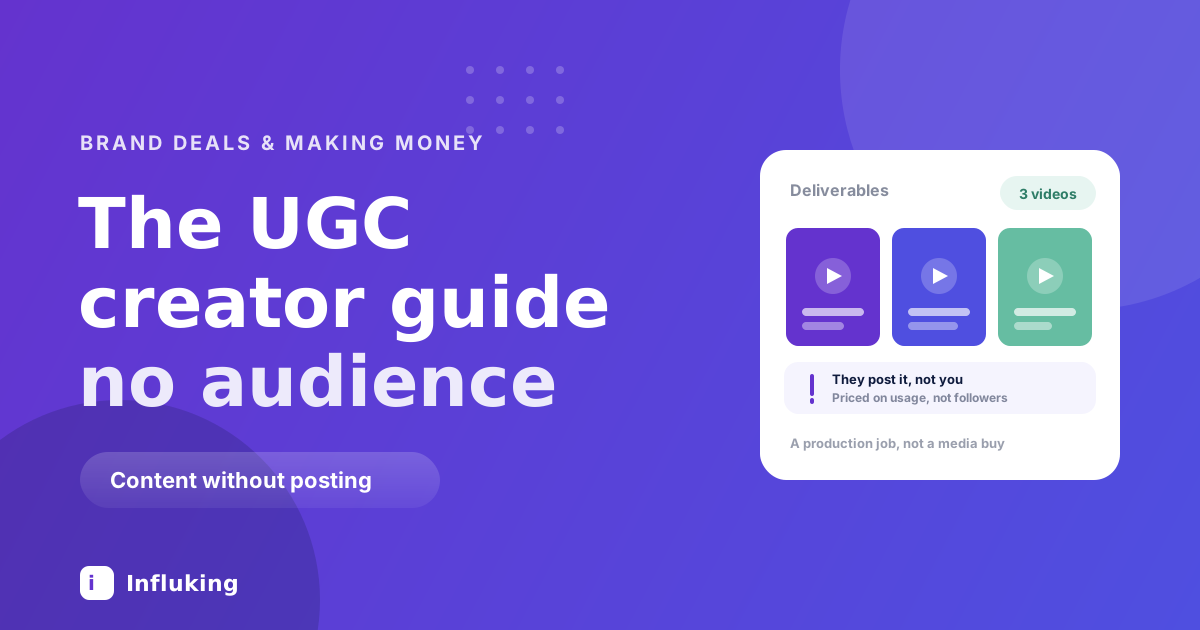
UGC work means making content for a brand to post on their own channels. You do not publish it. Your audience never sees it. What you are selling is the content itself, not access to your followers.
That distinction changes everything about how it is priced and who can do it. A creator with 400 followers can earn steadily from UGC, because nobody is buying the 400 followers.
How it differs from a sponsored post
A sponsored post sells two things bundled together: the content, and distribution to your audience. UGC unbundles them and sells only the first.
- Follower count is close to irrelevant. Brands look at whether your footage is good, not who follows you.
- Usage rights are the whole negotiation. The brand is buying a licence to use footage, so how and how long they can use it is the price.
- It is production work. Closer to freelance videography than to influence, with briefs, revisions and deadlines.
- The rate is lower per piece, and repeatable. One sponsored post might pay more than one UGC video, but UGC clients order in batches and come back monthly.
The trap is pricing UGC like a sponsored post, or worse, letting a brand pay UGC rates and then also asking you to post it. If they want it on your feed as well, that is a sponsored post with a UGC deliverable attached, and it is priced as both.
What to charge
Price per video, then price the usage on top. A common structure:
- Base rate per video. Covers concept, filming, editing and one round of revisions. Beginners in India often start around ₹2,000 to ₹5,000 per video, experienced creators with a strong portfolio charge several times that.
- Organic usage. The brand posting it on their own social channels. Often included in the base for a defined period, commonly three to six months.
- Paid usage. Running it as an advertisement. This is the expensive one and should always be a separate line, priced per platform and per period. Brands frequently ask for it without mentioning it.
- Whitelisting. Running ads from your handle. Different again, and priced higher because your name is attached to spend you do not control.
- Perpetual, all media. Push back. If you agree to it, charge as though selling the footage outright, because you are.
- Raw footage. Extra, and substantial. It lets them recut forever.
- Extra revisions, extra hooks, extra aspect ratios. Each a line item. Multiple hook variants for ad testing is the most common add-on and it is real work.
The rate card guide covers structuring these, and the same logic applies here with usage doing more of the work.
Building a portfolio without clients
The chicken-and-egg problem: brands want to see UGC work, and you have none. The solution is to make it anyway.
Pick three products you already own, in a category you want to work in, and make a proper UGC video for each. A hook, a demonstration, a benefit, a call to action, well lit and well edited. Nobody hired you, and it does not matter, because the brand is assessing whether you can make the thing.
Make them specific to a category rather than scattered. Three skincare videos say you are a skincare UGC creator. One skincare, one gadget and one cafe video say you are a hobbyist.
Keep them in one folder with a shareable link. That folder is your portfolio, and it does more than a media kit here, since the work speaks for itself.
What brands are actually assessing
- Does it look like a real person, not an advert? The entire value of UGC is that it does not look produced. Overly polished work loses to authentic-feeling work in ad testing.
- Is the hook strong? They will run it as an ad, where the first second decides the cost per result. The hook formulas matter more here than anywhere.
- Is the audio clean? The most common reason UGC gets rejected, and the cheapest to fix, per the microphone guide.
- Can you follow a brief? Hitting the required talking points is what gets you rebooked.
- Are you reliable? Deadlines matter more in UGC than in influencer work, because the content sits in a campaign schedule.
Finding the work
Direct outreach works better than platforms, because you can target brands whose ads you have actually seen. Watch what is being advertised to you, notice which brands run creator-style ads, and pitch those. They already believe in the format.
Say plainly that you are offering UGC rather than a sponsored post, since the two get confused constantly. Something like: "I make UGC video for brands to use on their own channels and in ads. I am not pitching a post on my page. Here are three examples." That sentence saves an entire email exchange, and the outreach templates cover the rest of the structure.
Marketplaces and agencies exist and pay less, but they are a reasonable way to get the first few credits.
The contract points that matter
Usage duration, usage media, and whether whitelisting is included. Those three decide whether the rate was fair. Also confirm whether they can edit your footage, whether they can use your face in ads targeting audiences you have not agreed to, and what happens if the campaign is extended.
Get a defined end date. "Until the campaign ends" is not a date. The wider anatomy is in contracts explained.
Mistakes that keep UGC creators cheap
- Charging per video with no usage terms. The single most expensive mistake, because paid usage is often worth more than the production fee.
- Agreeing to perpetual usage. You have sold the asset for the price of a rental.
- Unlimited revisions. Cap it at one or two rounds, then charge.
- Working for free product. Reasonable for one portfolio piece, not as a business model.
- Also posting it for free. That is a separate deliverable with a separate price.
- Handing over raw files by default. Deliver the edit. Raws are a separate negotiation.
UGC suits people who like making things and do not want to build an audience, and it pays from the first client rather than after a year of growth. The ceiling is lower than influencer work at the top end, and the floor is far higher, which for most people is the more useful trade.