Most creators sign brand contracts without reading them, on the reasonable grounds that they are long and dull and the deal is already agreed. The problem is that the contract is where the deal actually lives, and it usually says more than the email did.
You do not need legal training to read one. You need to know which clauses carry the money and which are boilerplate, and there are fewer of the first than you would think.
This walks through the document. The conversation that precedes it is covered in negotiating with brands, and the warning signs that a deal is bad are in red flags in brand deals.
Scope and deliverables
What you are making, how many, in what format, and by when.
Check that the list matches what you agreed and that nothing extra crept in. Watch for wording like "and such other content as may reasonably be required", which converts a fixed job into an open one. Ask for a specific list instead.
Make sure the number of revision rounds is stated. Unlimited revisions with no cap is the single most common way a fairly priced job becomes badly paid.
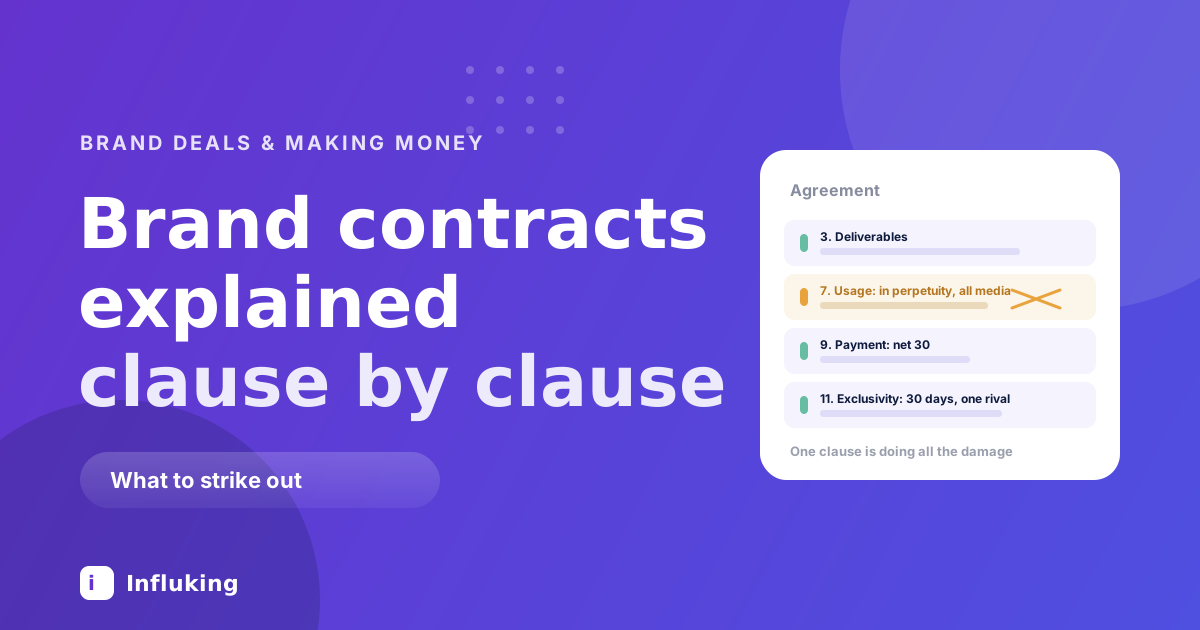
Usage rights, the clause that matters most
This defines what the brand can do with your content, where, and for how long. It is where most of the value sits and where most creators give away the most.
Three things to read carefully:
- Media. Their social channels only, or also website, email, paid advertising, print, in-store, third-party platforms? Each is worth something.
- Duration. A defined period, or perpetual? "In perpetuity" means forever, and it should be priced as selling the asset rather than renting it.
- Territory. Usually irrelevant for organic social, and relevant if they are running paid campaigns.
The phrase to look for is some version of "worldwide, perpetual, irrevocable, royalty-free licence across all media". That is the maximum grant, it is often the default in a brand's template, and it is regularly agreed by creators who did not realise it was negotiable. It is.
A reasonable counter is a defined period, usually three to twelve months, for named media, with an option to extend at an agreed fee. That way an extension becomes a second payment rather than something you already gave away.
Exclusivity
An agreement not to work with competitors for a period. Legitimate, and frequently drafted far more broadly than the brand actually needs.
Read the category definition. "No other beverage brands" is much wider than "no other energy drink brands", and a broad category in a niche you work in can block most of your income for the duration. Read the period too, and check whether it starts on signature, on posting, or on campaign end.
If the exclusivity is broad, either narrow it or price it. Both are normal responses.
Approval and revisions
Who signs off, how many rounds, and within what timeframe.
The clause to watch grants approval "at the brand's sole discretion" with no deadline and no limit. That means work continues until they are happy, on their schedule. Ask for a capped number of rounds and a response deadline, with approval deemed given if they do not respond within it.
This one matters more than it looks, because an unbounded approval process is how a two-day job takes six weeks.
Payment terms
The amount, when it is due, and what triggers it.
- Trigger. Payment on delivery is better than payment on publication, because campaign delays are not your problem.
- Window. Thirty days from invoice is reasonable, sixty is common, ninety is worth pushing back on.
- Deposit. Get part upfront with a new client.
- Late payment. A stated consequence changes how the invoice is queued.
- Expenses. If travel or props are involved, say who pays and whether approval is needed first.
The mechanics of getting paid once this is agreed are in how to invoice brands.
Content ownership
Separate from usage rights, and often confused with them.
Usage means they can use it. Ownership, or assignment of copyright, means it is theirs. Some contracts quietly assign ownership when a licence would do. If you own it, you can reuse the footage in your own portfolio and reel; if you assigned it, you may not be able to.
Push for a licence rather than assignment unless the fee genuinely reflects a buyout. And check whether you retain the right to show the work in your portfolio, which is worth asking for explicitly.
Disclosure and compliance
Well-drafted contracts require you to disclose the partnership properly, which you should be doing anyway under Indian advertising guidelines. This clause protects both sides.
Watch for the reverse: any instruction not to disclose, or to disclose in a way that hides the relationship, is a reason to walk. The legal exposure sits with you as well as the brand.
Termination and takedown
What happens if either side pulls out, and whether you must keep the post live.
Check whether you are paid for work already done if they cancel. A kill fee, often a percentage of the total, is standard in production work and reasonable to ask for. Check any requirement to keep content published for a minimum period, which is fine if defined and awkward if open-ended.
Morality and conduct clauses
These let the brand terminate if you do something that damages their reputation. Common, usually reasonable, and worth reading for scope.
Vague wording such as conduct the brand "considers" damaging gives them unilateral judgement. Wording tied to actual events, such as a criminal conviction or public misconduct, is fairer. Also check whether termination under this clause means repaying fees for work already delivered.
The boilerplate
Governing law, jurisdiction, notices, confidentiality, force majeure. Mostly standard, and two are worth a glance. Jurisdiction in a distant city makes any dispute impractical to pursue. And a confidentiality clause broad enough to stop you mentioning that you worked with them conflicts with needing the work in your portfolio.
When the brand sends no contract
Common with smaller brands, and not a reason to skip having something in writing. An email you send confirming the terms, which they reply agreeing to, is a record.
Cover: deliverables and quantity, deadline, fee, payment timing, usage media and duration, exclusivity if any, and revision rounds. Six lines is enough. "Confirming what we agreed so we are both clear" is a normal, unaggressive way to send it.
An agreement in writing is what turns a dispute into an administrative matter. A DM thread is better than nothing and much weaker than a confirmation email.
Before you sign
- Check the deliverables match what you agreed.
- Read the usage clause twice. Media, duration, territory.
- Check exclusivity scope and period.
- Confirm revision rounds are capped.
- Confirm payment trigger and window.
- Check licence versus assignment.
- Check you can show it in your portfolio.
- Ask for anything unclear in writing. A brand that will not clarify is telling you something.
Asking for changes is normal and expected. Brand templates are drafted to favour the brand because that is what templates do, and most companies will agree to reasonable amendments without difficulty. For a deal large enough to matter, an hour of a lawyer's time is cheap insurance, and the same reviewed contract will cover most of your future work.