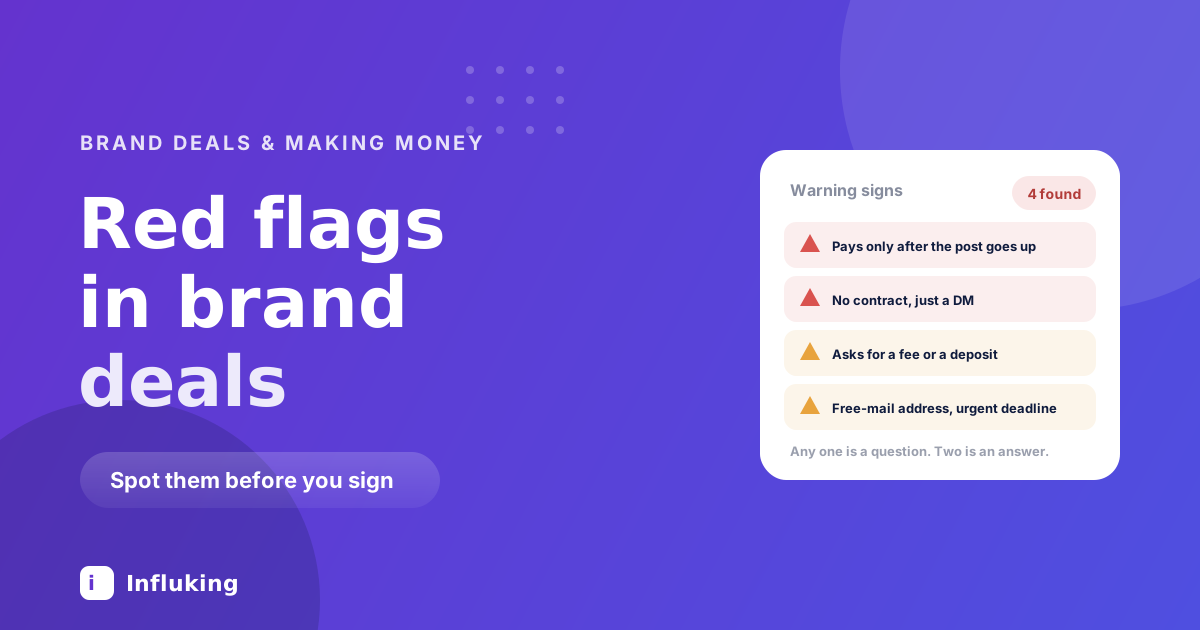
Two different problems get filed under the same heading. One is outright fraud, where nobody was ever going to pay you and the goal is your money or your account. The other is a real brand offering a genuinely bad deal.
The first needs detecting. The second needs negotiating, which is covered in negotiating with brands. Telling them apart quickly is the useful skill.
Signs it is a scam
Any one of these is enough to stop.
- They ask you to pay anything. A registration fee, a deposit, shipping for a free product, a refundable security amount. Legitimate brands do not charge creators to work with them. This is the single clearest signal there is.
- They send a payment and ask you to return part of it. A classic overpayment fraud. The original payment reverses later and the money you sent back is gone.
- They want your account login. No campaign requires your password. Whitelisting and ad permissions are granted through official tools that never involve sharing credentials.
- A link to "verify" or "claim" the partnership. Phishing. Instagram partnership requests arrive inside the app, not through a link in a DM.
- They ask for bank OTPs or card details. Payment needs your account number, never a one-time password.
- A free-mail address for a large brand. A company with a marketing budget has a company domain.
- Crypto or gift-card payment. No legitimate brand pays this way.
- Extreme urgency. Pressure to decide today exists to stop you checking.
The five-minute check: look up the company domain, find the person on LinkedIn, and email them at their company address rather than replying in the DM. Frauds do not survive that.
Signs it is a real brand with a bad offer
These are not fraud. They are a company trying to get more than it pays for, and each is negotiable.
- Perpetual usage at an organic-post price. The most common one. They are buying the asset and paying rent, as explained in contracts explained.
- Payment on publication rather than delivery. Ties your money to a schedule you do not control.
- Broad exclusivity for a small fee. Blocking a whole category for months can cost more than the deal pays.
- Unlimited revisions with no deadline. Converts a fixed job into an open-ended one.
- Ninety-day payment terms. Common at large companies and worth pushing back on.
- "Exposure" as part of the compensation. Exposure from an account smaller than yours is not compensation.
- Approval by an unnamed committee. Nobody can approve, so nothing gets approved.
- Raw files requested as standard. A separate and substantial deliverable.
None of these mean walk away. They mean counter.
Warning signs in how they communicate
- They will not put anything in writing. The clearest early signal of trouble with an otherwise real company.
- The brief keeps changing before anything is signed. It will keep changing afterwards.
- They avoid the money question. A brand that will not discuss budget after two exchanges usually does not have one.
- Aggressive response to a normal rate. How they treat you now is how they will treat you at invoice time.
- Your contact has no authority. Ask early who signs off.
- They mention how many creators want this slot. A pressure tactic, and a preview of the relationship.
The deals that damage you rather than cost you
Some offers pay properly and are still worth refusing.
- Products you would not use. Audiences detect this quickly and it costs trust that took a year to earn.
- Claims you cannot verify. If the brief requires you to say a product does something you have not seen it do, you are the one making the claim to your audience.
- Regulated categories with sloppy briefs. Health, supplements, finance and anything investment-related carry real compliance obligations, and the creator is exposed too.
- Anything asking you not to disclose. Undisclosed advertising breaches Indian advertising guidelines and the exposure includes you.
- Brands with a live controversy. Check before agreeing, not after posting.
- Competitors of a current partner. Check your existing exclusivity terms first.
Checks worth doing every time
- Does the email domain match the company website?
- Does the person exist on LinkedIn with that role?
- Does the company have a real trading history you can find?
- Have other creators worked with them, and were they paid? Creator groups answer this quickly.
- Does the contract name a real legal entity with an address?
- Are the payment terms and trigger written down?
Six checks, five minutes. Do them before you spend a day filming, not after.
If it goes wrong
For non-payment by a real company, follow the escalation sequence in how to invoice brands: reminders, then your contact, then finance, then a formal notice. Most cases resolve before the last step.
For fraud, stop communicating, do not send anything further, and report the account. If you shared bank details or made a payment, contact your bank immediately and report it through the national cybercrime channel. Speed matters more than anything else with financial fraud.
Either way, tell other creators. Creator communities are the most effective warning system that exists here, because the same operation approaches dozens of people with the same script.
What legitimate brands do
Useful as a baseline. A real deal usually involves a company email address, a named contact with a findable role, a written brief, a contract or at least a confirming email, a discussion about usage and exclusivity, agreed payment terms before work starts, and no urgency that prevents you checking anything.
Not every good brand does all seven, especially smaller ones. But a deal missing most of them is not a deal yet, whatever the fee looks like.
The instinct worth trusting is the one that notices you are being rushed. Almost every bad outcome in this area starts with agreeing to something quickly because it seemed like an opportunity that would disappear. Real opportunities survive a day of checking.