Most late payments are not brands refusing to pay. They are invoices that could not be processed: no purchase order number, wrong entity name, sent to the person who commissioned the work rather than to accounts.
The invoice is an administrative document that has to satisfy someone who has never heard of you and will not chase you for missing details. They will simply not pay it.
Before you invoice
Get these at the point of agreement, not after delivery. Asking for a purchase order number two weeks after the work is done is how thirty-day terms become ninety.
- The legal entity name and address. Not the brand name. The company that pays may be a different registered entity.
- The billing email. Usually accounts payable, not your contact.
- A purchase order number, if they use them. Larger companies cannot pay without one.
- Whether vendor onboarding is required. Some brands need you registered in their system before an invoice can even be entered, which takes weeks.
- Their payment terms. Confirmed in writing.
- Their tax details, including GSTIN if applicable.
What goes on the invoice
- The word "Invoice" and a unique sequential number. Sequential matters for your own records and for tax.
- Invoice date and due date. Write the actual due date, not "net 30". Removing the arithmetic removes an excuse.
- Your details. Name or business name, address, PAN, and GSTIN if you are registered.
- Their details. Full legal entity name, address, GSTIN, and the PO number.
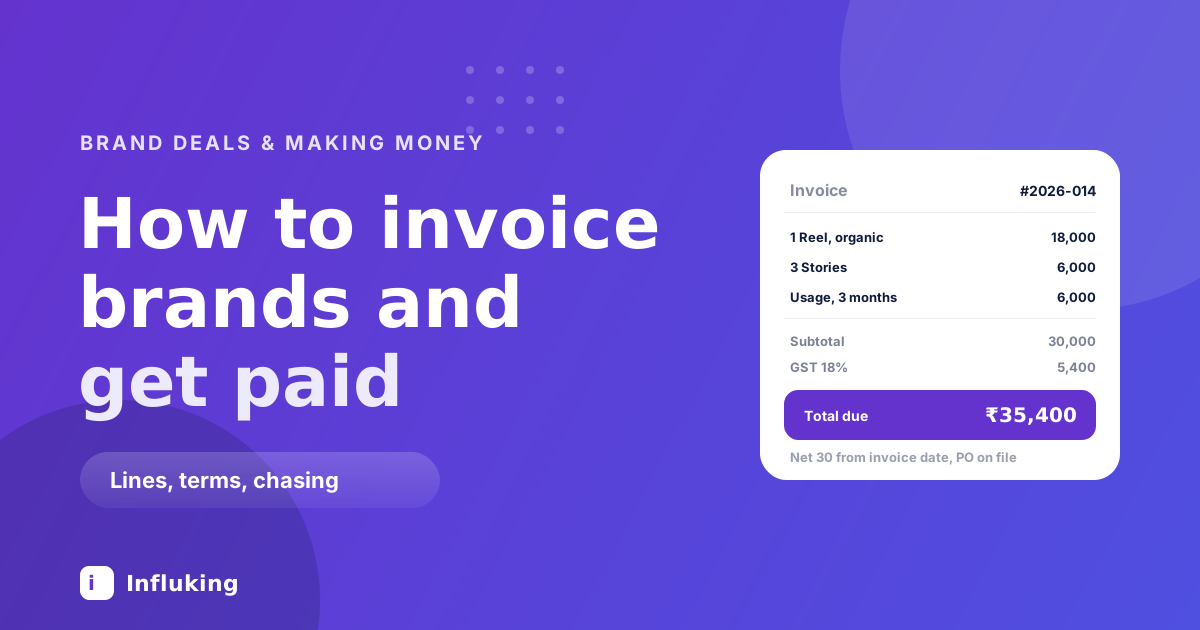
- Itemised lines. One line per deliverable, matching the agreement wording. "1 Reel, organic" and "Usage, 3 months" as separate lines, not one bundled figure.
- Subtotal, tax, total. Show GST separately if you charge it, per GST basics.
- Bank details. Account name, number, IFSC. The most common omission.
- A short note on late payment. Stating your terms is normal and it changes how the invoice is treated.
Itemising matters beyond bookkeeping. If a dispute arises about whether usage was included, the invoice is the record.
Send it correctly
- PDF, never a document file that can be edited.
- Name the file usefully: YourName-BrandName-Invoice-014.pdf.
- Email accounts payable, with your commissioning contact copied in.
- Put the PO number in the subject line.
- Keep the email body to two sentences: what it is for, and the due date.
- Invoice on delivery, not when you remember. The clock starts from the invoice date.
When to invoice
For new clients, invoice half upfront before you start and the balance on delivery. This is standard and it filters out brands that were never going to pay.
Tie the final invoice to delivery of the content rather than to publication. If they delay the campaign by two months, "payable on posting" leaves you unpaid for work you finished. This is one of the terms worth settling during the negotiation rather than at invoice time.
The chasing sequence
Have a sequence and follow it. Most people do nothing for six weeks and then send something emotional, which is the worst combination.
- Three days before due. A short friendly note confirming it is scheduled. This one catches most problems while they are still fixable.
- Day one overdue. Factual. Invoice number, amount, due date, request for a payment date.
- Day seven. Same, and ask your commissioning contact directly to chase internally. They usually can, and they usually will, because they want to work with you again.
- Day fifteen. Escalate. Ask for the finance manager, and reference the agreement and your late payment terms.
- Day thirty. A formal notice referencing the contract, stating a final date, and noting what you will do next. Keep it unemotional.
- Beyond that. A lawyer's notice costs less than people assume and often works on its own. For smaller amounts, decide whether the time is worth more than the money.
Never stop being polite and never stop being persistent. The tone that gets paid assumes it is an administrative oversight, right up until it clearly is not.
Protecting yourself
- Do not hand over final files before the deposit clears with a new client.
- Keep everything in writing. A DM agreeing scope is evidence. A phone call is not.
- Do not take down a live post as leverage if a contract requires it to stay up. Check before threatening it.
- Watermark drafts. For UGC especially, deliver watermarked previews and clean files on payment, which the UGC guide covers.
- Charge more, or refuse, on the second late payment. A brand that paid late once will pay late again.
Records to keep
Keep every invoice, every contract and every payment confirmation for at least six years. Keep a simple sheet of invoice number, brand, amount, date sent, date due, date paid. It takes seconds per entry and it is what makes filing possible without reconstructing a year from your inbox.
Note the TDS deducted on each payment as it happens, since the amount that lands will be lower than the invoice. Reconciling that at year end is much easier if you recorded it at the time, as covered in the tax guide.
None of this is difficult, and it is the difference between being paid in thirty days and spending your evenings writing follow-up emails. Set up a template once and the whole thing takes four minutes per job.