This covers GST only. Income tax, TDS and what you can claim as expenses are a separate system, covered in the tax guide for creators in India.
The same caution applies here, more strongly. GST rules, thresholds, rates and procedures change, and several points below depend on specifics such as which state you are in and who your clients are. Use this to understand the shape of the thing and the questions to ask, then get a chartered accountant to confirm your position before registering or charging anything.
What GST actually is for a creator
If you are registered, you add GST to your invoice, the brand pays the larger total, and you pass that portion to the government when you file. The tax is charged on your service and collected by you on the government's behalf.
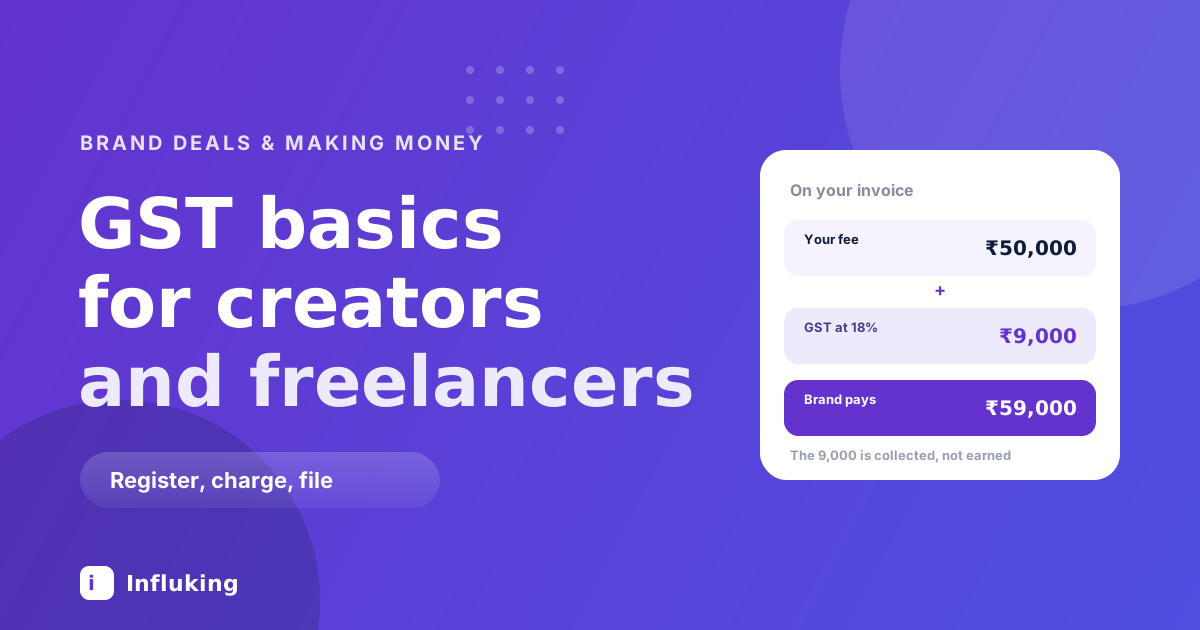
This is the part creators most often misunderstand. Money collected as GST was never your income. Invoicing ₹50,000 plus GST means roughly ₹59,000 arrives and the extra was never yours to spend. Keeping it in the same account you spend from is how people end up short at filing time.
Influencer and advertising services currently attract GST at 18%, though rates are revisable, so confirm the rate applicable to your service rather than assuming.
When registration becomes compulsory
Registration is required once your turnover crosses a threshold in a financial year. For service providers this has commonly been ₹20 lakh, with a lower figure of ₹10 lakh for certain special category states. Thresholds have changed before and differ for goods, so check the current position for your state.
Some situations require registration regardless of turnover, and the rules around inter-state supply of services, e-commerce operators and agents are the ones creators most often get wrong. If you work through a platform or agency, or bill clients in other states, ask specifically rather than relying on a general threshold.
You can also register voluntarily below the threshold. Whether that helps depends on your clients and your costs, which the next two sections cover.
What changes once you register
- You must charge GST on every invoice for taxable services, not selectively.
- You must file returns regularly, monthly or quarterly depending on the scheme, and filing is required even in months with no income. Missing returns attracts late fees that accumulate.
- You can claim input tax credit on GST you paid on business purchases, offsetting it against what you collected.
- Your compliance load rises permanently. Deregistering is possible but not casual.
The filing obligation is the part people underestimate. It is a recurring administrative task for as long as you are registered, and the late fees for a nil return you forgot are genuinely annoying.
Input tax credit, briefly
When you buy something for the business and pay GST on it, that GST can usually be offset against the GST you collected, so you remit only the difference. Your camera, your editing subscription, your phone bill.
To claim it you need a proper tax invoice showing your GSTIN, from a registered supplier, and the purchase has to be for business use. Buying from an unregistered seller or in your personal name means no credit, which is a reason to give your GSTIN when buying equipment.
This is why registration sometimes benefits creators with high equipment and software spend even below the threshold.
Do brands care whether you are registered?
Often, yes. Larger companies claim input credit on what they pay you, which they can only do if you issue a proper GST invoice. Some brands prefer or require registered vendors for this reason, and being registered can make you easier to onboard.
Practically, always confirm at quoting stage whether your figure is inclusive or exclusive of GST. Quoting ₹50,000 and later adding GST when the brand assumed the total was ₹50,000 is a common and avoidable argument, and it is one of the terms to settle during the negotiation.
Foreign brands are treated differently
Services supplied to a client outside India, paid for in foreign currency, are generally treated as an export of services and zero-rated, meaning GST is not charged on the invoice. That is not the same as being outside the system: there are conditions about where the recipient is located and how payment is received, and there is a filing route involving a formal undertaking that lets you export without paying tax and claiming it back.
If a meaningful part of your income comes from brands abroad, this is worth setting up correctly from the start rather than fixing later. Raise it with your CA explicitly, because the treatment differs from domestic work in ways that are easy to get wrong.
What a GST invoice needs
- Your name, address and GSTIN.
- A unique sequential invoice number and date.
- The client's name, address and GSTIN.
- A description of the service and the applicable classification code for services.
- Taxable value, then the tax split into the correct components depending on whether the client is in your state or another.
- The total payable, and your bank details.
The tax splits differently for clients inside your state versus outside it, which is one of the more common errors on creator invoices. The invoicing guide covers the rest of the document.
Common mistakes
- Spending the GST you collected. It was never income.
- Quoting without saying inclusive or exclusive. Costs you the difference or an argument.
- Registering without understanding the filing burden. Returns are due even in empty months.
- Missing nil returns. Late fees accumulate on nothing.
- Buying equipment personally. No input credit without your GSTIN on the invoice.
- Assuming foreign income works the same way. It does not.
- Watching turnover only at year end. The threshold can be crossed mid-year and obligations start from then.
The practical version for most creators: track your turnover so you see the threshold coming rather than crossing it unnoticed, keep GST collected in a separate account, always state whether a quote includes it, and get an accountant to confirm your position before you register. The cost of asking is small next to the cost of a year of incorrect invoices.