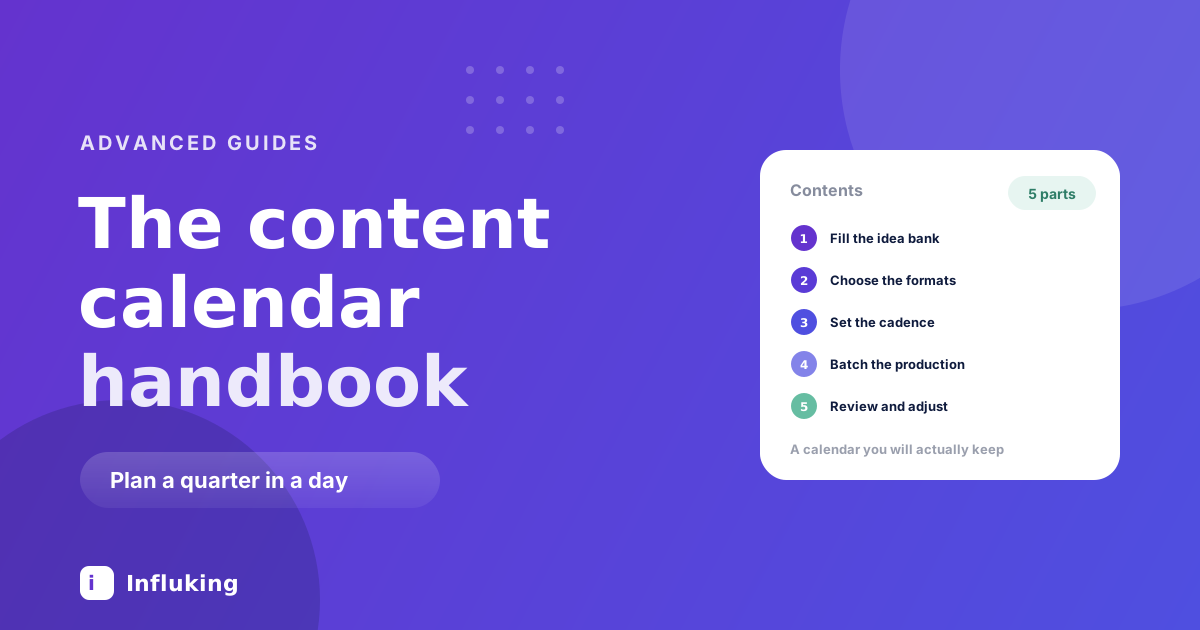
Most content calendars are abandoned in week three. They fail for the same two reasons: they were built as a schedule of dates rather than a pipeline of stages, and they assumed every week would be a normal week.
A calendar that survives contact with a bad month looks different. This covers building one.
Step one: fill the bank before you plan anything
Planning with an empty idea list produces filler, and filler drags your averages down while teaching the algorithm your account is low-signal.
Get to thirty ideas before touching a calendar. They come from your DMs and comments, search autocomplete, your own best-performing posts, and the outliers of creators in adjacent niches. The full system is in content ideas for every niche.
Tag each idea with a format as you capture it. An idea plus a format is shootable; an idea alone is still homework.
Step two: decide the format mix
Formats do different jobs, so the mix follows your goal rather than your preference.
Reels do the acquiring, carousels earn saves, Stories hold the audience you have. Weight heavily towards Reels while growing, and shift towards carousels once you are selling something. The reasoning is in carousel vs Reel vs Story.
A workable default while growing: four Reels, one carousel, Stories on most days.
Step three: set a cadence you can actually hold
Take how long one good post genuinely takes you, multiply by the number per week, and compare it against the hours you would give this on a bad week rather than a good one. That is your real cadence.
There is a floor of roughly two posts a week below which nothing compounds, and a ceiling around one a day past which posts compete with each other. How often should you post covers both.
Choose the number you can hold for a year, not the number you can hold for a month.
Step four: plan by pipeline, not by date
This is the change that makes calendars survive.
Instead of "Tuesday: post about lighting", track each item through stages: idea, scripted, filmed, edited, scheduled. Then a bad week means fewer items advance, rather than a missed date and a broken streak.
Build a two-week buffer of finished content. Getting there takes one uncomfortable period of overproduction and permanently changes the pressure from daily to occasional. Seeing four items stuck at "filmed" tells you exactly what this week's session should be.
Step five: batch the production
Do each stage for all items before moving to the next. Write four scripts, then film four videos, then edit four. Scripting, filming and editing one video at a time four times over captures almost none of the benefit, because you pay the setup cost four times.
Theme your days so each has one kind of work, which the productivity systems post covers in detail. Deciding what to do today is what actually exhausts people, and a themed week removes that decision entirely.
Step six: leave room
A calendar filled to 100% breaks on the first unplanned thing, and the unplanned things are often the best posts.
Plan about 70% of slots. The rest absorbs the timely post, the question that arrived in your DMs this morning, the follow-up to something that performed unexpectedly well. If nothing arrives, pull from the bank.
Also leave a repost slot. Most of your audience never saw your best post from six months ago, and a Reel that worked once usually works again.
A quarter in one afternoon
- Fill the bank to thirty ideas, each tagged with a format.
- Pick three or four content pillars and check every idea belongs to one.
- Set the weekly cadence and format mix.
- Assign ideas to weeks, filling about 70% of slots.
- Mark which ideas need something extra: a location, a guest, good light. Those get scheduled around.
- Block the filming and editing days in the calendar for the whole quarter.
- Set a monthly review date to adjust.
That is two to three hours and it removes the daily decision for three months.
Seasonality and campaigns
Two things worth planning further ahead than the rest. Festive and seasonal content, because brands book that months in advance and you want relevant posts already live when they are looking. And any brand deliverables you have committed to, which should sit in the calendar as fixed obligations rather than as things you will fit in, per managing clients.
Reviewing it
A calendar is a hypothesis about what will work. The monthly review is where it meets evidence.
Rank the month's posts by follows gained, find what the top three had in common, and let that change next month's mix. Also count how many posts were made out of obligation rather than because they were good, which is your filler rate and the clearest signal the cadence is too high. Both are part of the monthly review template.
Why calendars fail
- Built before the idea bank exists. Produces filler by design.
- Scheduled by date rather than by stage. One bad week breaks it visibly.
- Filled completely. No room for anything timely.
- Cadence set optimistically. Based on a good week rather than a bad one.
- No buffer. Every post is due immediately, forever.
- Never reviewed. Becomes a plan you follow rather than a plan you improve.
The point of a calendar is not discipline. It is removing the daily question of what to post, because that question, repeated for months, is what ends most accounts long before the workload does.