Most creators do not have a time problem. They have a switching problem: an hour of filming interrupted by a brand email, then twenty minutes of editing, then replying to comments, then trying to think of an idea while feeling behind on everything.
Each switch costs more than the task. Grouping similar work is the single change that makes four posts a week possible alongside a job, and it is why every system below is a variation on doing one kind of thing at a time.
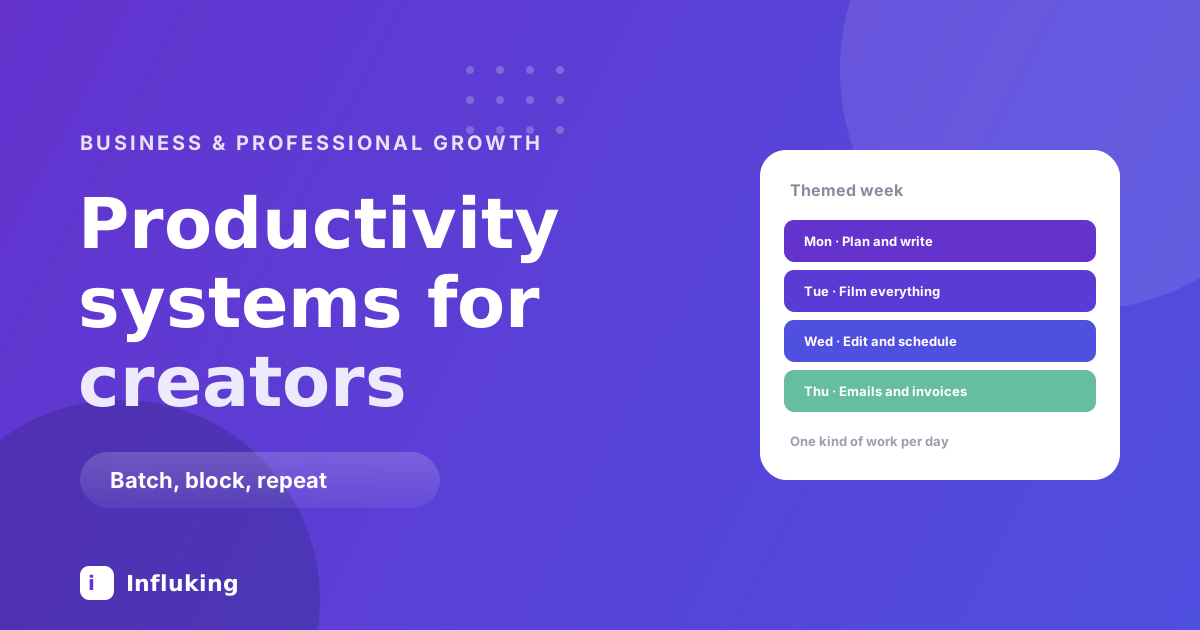
Theme your days
Give each day one type of work rather than a slice of everything.
- Planning day. Ideas, scripts, hooks, deciding what gets made. Requires a clear head, so put it where your best hours are.
- Filming day. Set up once, film everything. Setting up is most of the cost, so filming four things costs barely more than filming one.
- Editing day. Or your editor's day, if you have made that hire, per the hiring guide.
- Business day. Emails, pitches, invoices, calls. Grouped so it does not leak into everything else.
Four themed half-days beats seven days of doing a bit of everything, and it means a cancelled day costs you one function rather than derailing the week.
Batch properly
Batching is not just doing several at once. It is doing each stage for all items before moving to the next stage.
Write four scripts, then film four videos, then edit four videos. Not: script, film, edit, publish, repeat four times. The second is what most people call batching and it captures almost none of the benefit, because you still pay the setup cost four times.
Practical version: one session writing, one session filming with a single lighting and audio setup, one session editing with the same settings loaded. The content bank is what makes the writing session possible, because you arrive with ideas rather than hunting for them.
Keep a pipeline, not a deadline
Publishing what you made yesterday means one bad week produces a gap. Publishing what you made two weeks ago means a bad week costs nothing.
Build a buffer of two weeks of finished content. Getting there requires one uncomfortable period of overproduction, and it changes the whole experience of being a creator, because the pressure moves from daily to occasional.
Track content by stage rather than as a to-do list: idea, scripted, filmed, edited, scheduled. Seeing four items stuck at "filmed" tells you exactly what this week's session should be.
Protect the thinking
Ideas are the input to everything else and the first thing squeezed out, because thinking does not look like work and produces nothing visible for an hour.
Give it a fixed slot and treat it as unmovable. Away from the phone if possible, since the algorithm is very good at replacing your thinking with someone else's content. Most creators who feel creatively empty are consuming more than they are reflecting.
Capture ideas as they arrive rather than trying to generate them on schedule. One note, added to constantly, judged later.
Separate making from being online
Being a creator means the tool and the distraction are the same app. Two habits help.
Do your production work outside the app. Write in a notes app, edit in an editor, and open Instagram to publish and to reply, not to browse. The moment you open it to post and stay for twenty minutes, the session is gone.
Batch community time too. Two fixed windows a day for comments and DMs, rather than checking continuously. The first hour after publishing genuinely matters for a post, so put one window there deliberately, as the engagement guide covers.
Two lists
Keep a list of things that move the business and a list of things that merely need doing. Most people work entirely from the second, because it is satisfying and finite.
Do one thing from the first list before anything from the second, every working day. Pitching a brand, making the post you have been avoiding, fixing the pricing conversation. That single rule redistributes effort towards what actually changes outcomes.
Tools, minimally
A notes app, a calendar, one spreadsheet and cloud storage covers almost everything. Elaborate systems are a form of procrastination that feels productive.
The one tool worth being deliberate about is a single sheet tracking deals and next actions, which is what the creator CRM post sets up. Everything else can be plain.
Energy over time
Creator work is not uniform. Writing hooks and appearing on camera need energy. Editing and admin do not.
Put the demanding work in your best hours, whenever those are, and use the low hours for editing, invoicing and file management. Trying to write a hook at 11pm produces the generic version, and the generic version is what fails in the first second.
Where systems break
- Building the system instead of using it. A week spent designing a workflow is a week not filming.
- Too rigid. A system that assumes every week is normal breaks on the first abnormal week. Have a reduced version.
- No buffer. Without a pipeline, one bad week becomes a visible gap and then a lost habit.
- Confusing busy with productive. Replying to comments all day feels like work and moves nothing.
- Not protecting a day off. Always-on is how people stop entirely at month eight.
A workable week
Sunday evening: write four hooks and scripts from the idea bank. Monday: film all four in one setup. Tuesday and Wednesday: edit, or review your editor's cuts. Thursday: business block for pitching, invoicing and follow-ups. Publishing spread across the week from the buffer, with two short windows daily for comments and DMs.
That is roughly ten to twelve focused hours, which is compatible with a job. It works because nothing in it requires deciding what to do today, and the daily decision is what actually exhausts people, as the cadence post covers.