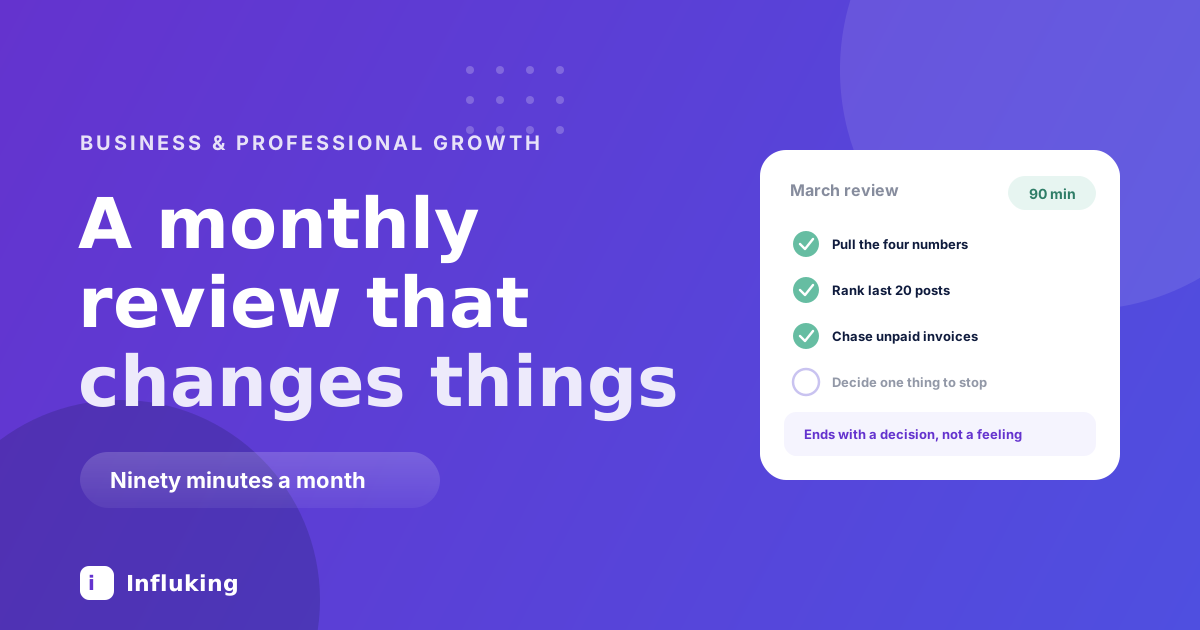
Most creators review their month by scrolling Insights, feeling briefly good or bad, and carrying on exactly as before. That is not a review, it is a mood.
A review is a meeting with yourself that ends in decisions. It needs an agenda, a fixed length and an output, or it becomes the same scroll with a spreadsheet open.
The rules
- Ninety minutes, first working day of the month. In the calendar, treated like a client call.
- Look at the whole month, not the last week. Recency is what makes reviews emotional.
- End with written decisions. If nothing changes, the review did not happen.
- Limit to three decisions. More than three means none get done.
- Keep every past review. Reading last quarter's is often more useful than this month's numbers.
Part one: the numbers, twenty minutes
Fill in your dashboard row for the month and pull the per-post figures. Then answer, in writing:
- Follows per post: up or down on last month?
- Non-follower reach share: up or down?
- Saves per post: up or down?
- Revenue, and revenue per post: up or down?
- What share of revenue came from the largest single client?
Compare against last month and against three months ago. One month is noise; a three-month direction is information.
Part two: the content, twenty-five minutes
Sort the month's posts by follows gained. Then look at the top three and the bottom three and answer two questions honestly.
What did the top three have in common? Format, topic, hook style, length, where the turn landed. Be specific. "They were good" is not an answer; "all three were mistake-list Reels under 25 seconds with the hook as on-screen text" is.
What did the bottom three have in common? Usually a pattern too, and usually one you already suspected.
Then the question people avoid: how many posts this month were made because they were on the plan rather than because they were good? That number is your filler rate, and it is what drags averages down.
Part three: the business, twenty-five minutes
Open your deal tracker and go row by row.
- Anything invoiced and unpaid? Chase it today, during the review, per the sequence in how to invoice brands.
- Any row without a next action? Give it one or move it to dormant.
- How many pitches went out? If the answer is none, that is why next month will be quiet.
- What is agreed for next month? The pipeline is a leading indicator of income the same way saves are for reach.
- Any client worth raising rates for, or dropping?
- Is tax money set aside? Per the tax guide.
Pitching is the thing that silently stops during busy months, and the consequence arrives six to eight weeks later. Counting pitches monthly is the earliest warning available.
Part four: decisions, twenty minutes
Write three sentences. One thing to do more of, one thing to stop, one experiment for the month.
The stop is the hardest and the most valuable. Creators add continuously and remove nothing, which is how a workload becomes unsustainable. Something has to come off: a format that never performs, a platform nobody engages on, a client who costs more than they pay.
The experiment should be one variable tested across five posts, not five changes at once, or next month's review cannot tell you what worked.
Write the three decisions somewhere you will see them, and start the next review by checking whether you did them.
The template
Copy this into a note each month:
- Month.
- Numbers. Follows per post, non-follower share, saves per post, revenue, revenue per post, largest client share. Each with a direction against last month.
- Top three posts and what they had in common.
- Bottom three posts and what they had in common.
- Filler count. Posts made out of obligation.
- Pipeline. Pitches sent, deals agreed, work confirmed for next month.
- Money. Unpaid invoices, tax set aside, largest client concentration.
- Do more of.
- Stop.
- Experiment.
- Did I do last month's three decisions?
Every quarter, three extra questions
Is the niche still right, or has the audience drifted from what I want to make? Is the pricing still right given demand and where my time goes? And what did I do this quarter that I should not do next quarter at all?
These are the questions that catch slow problems, the kind that never look urgent in a single month and eventually force a rebrand or a burnout break.
Why reviews fail
- No agenda. Becomes scrolling.
- No decisions. Becomes reporting.
- Too many decisions. Becomes nothing.
- Skipped in busy months. Exactly when it matters most.
- Only looking at content. The business half is where the income problems are visible earliest.
- Judging a single month. One month is weather. A quarter is climate.
Ninety minutes a month is eighteen hours a year, and it is the difference between a year of posting and a year of improving. The specific value is not in the numbers, which you could look at any time, but in being forced to write down what you will stop doing.