Every creator is told to diversify. Most take it as instruction to start a newsletter, a podcast, a store and a course in the same quarter, and end up doing five things at a level nobody pays for.
Diversification is a response to a specific risk: too much of your income coming from one place. Until that risk exists, adding streams is just adding work.
The number that decides
Work out what share of last quarter's income came from your single largest source, whether that is one client or one type of work.
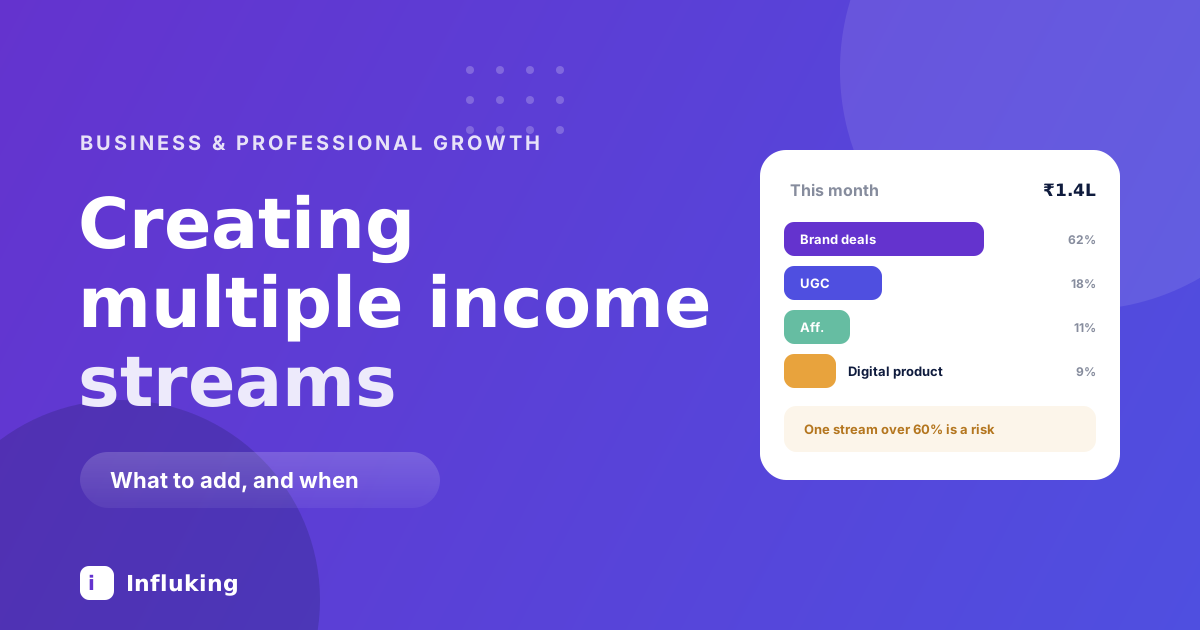
Under about 40% and you are reasonably spread. Between 40% and 60% is normal and worth watching. Over 60% from one client is genuine exposure, because losing them is losing most of your income at once.
That figure, not a general urge to diversify, is what should trigger adding something. It is also one of the numbers worth tracking in an analytics dashboard.
The streams, and what they actually pay
- Brand deals. The largest and lumpiest. Highest pay per hour when you have negotiated well, and the least predictable month to month.
- UGC. Steady, repeatable, lower per piece, and independent of follower count. The most reliable second stream for most people, covered in the UGC guide.
- Affiliate. Slow to start, compounds, keeps paying from old content. Small at first and genuinely passive later, per the affiliate guide.
- Digital products. Templates, presets, guides. High margin, no delivery cost, and entirely dependent on having an audience with a specific problem you can solve in a file.
- Services. Consulting, strategy, coaching, doing social for a brand. The fastest way to earn properly with a small audience, because you are selling expertise rather than reach.
- Courses and cohorts. Real income and real work. Closer to running a teaching business than to posting.
- Memberships. Predictable recurring revenue, and a permanent content obligation. Only sensible with a genuinely committed audience.
- Speaking and workshops. Well paid per hour, irregular, and usually arrives because of everything else rather than being pursued directly.
- Licensing content. Selling usage of footage you already made. Underused, and the natural extension of doing UGC well.
Which of these are realistic depends on your size and niche, which the earnings by tier post breaks down.
The order to add them
Add streams that reuse work you are already doing. Each new stream should share inputs with an existing one, or it is a second job.
- Get one stream working properly first. Usually brand deals or UGC. A second stream started to escape a first one that is not working produces two weak streams.
- Add the adjacent one. If you do brand deals, add UGC. Same filming, same editing, different buyer, and it fills the months when sponsorship is quiet.
- Layer affiliate underneath. It requires no new production if you are already making recommendation content. Start it early precisely because it takes months to compound.
- Then a service. The questions people already ask you in DMs are the service. Highest rate per hour and it caps at your time.
- Then a product. Only once you know exactly what people ask for repeatedly, because that answer becomes the product.
- Membership or course last. Both are ongoing commitments and both fail without a proven audience appetite.
Active, passive and the honest distinction
Streams differ in whether income continues when you stop. Brand deals and services stop immediately. Affiliate and digital products keep going for a while. Nothing is truly passive, because everything needs traffic and traffic needs content.
The useful version of this idea is not passive income but decoupled income: money that does not depend on this month's posting schedule. That is what makes an illness, a holiday or a bad month survivable, and it is worth more than a slightly higher total.
Where diversification goes wrong
- Starting a stream to escape a boring one. The new one becomes boring too, and now there are two half-finished things.
- Streams that share no inputs. A podcast, a newsletter and a store are three production pipelines, not one business.
- Building a product before knowing the demand. Six weeks making something nobody asked for is the most common creator mistake in this area.
- Underpricing the service. Consulting priced like content ends up worse paid than the content.
- Ignoring the delivery cost. Memberships and courses have ongoing obligations that arrive every month whether you feel like it or not.
- Diversifying instead of raising rates. Often the same income is available by charging properly for what you already do, which the negotiating guide covers.
A realistic shape
A working creator business a couple of years in often looks like most income from brand work, a solid slice from UGC or services, a smaller compounding slice from affiliate, and something small and high-margin on top. No single client above about a third.
That is four streams, three of which reuse the same filming and editing. It is not five separate businesses, and that is the whole point.
Diversify when concentration says you are exposed, not because it sounds prudent. And when you do, add the thing that reuses what you already make, because a stream that needs a whole new production pipeline is a job you have given yourself rather than income you have added.