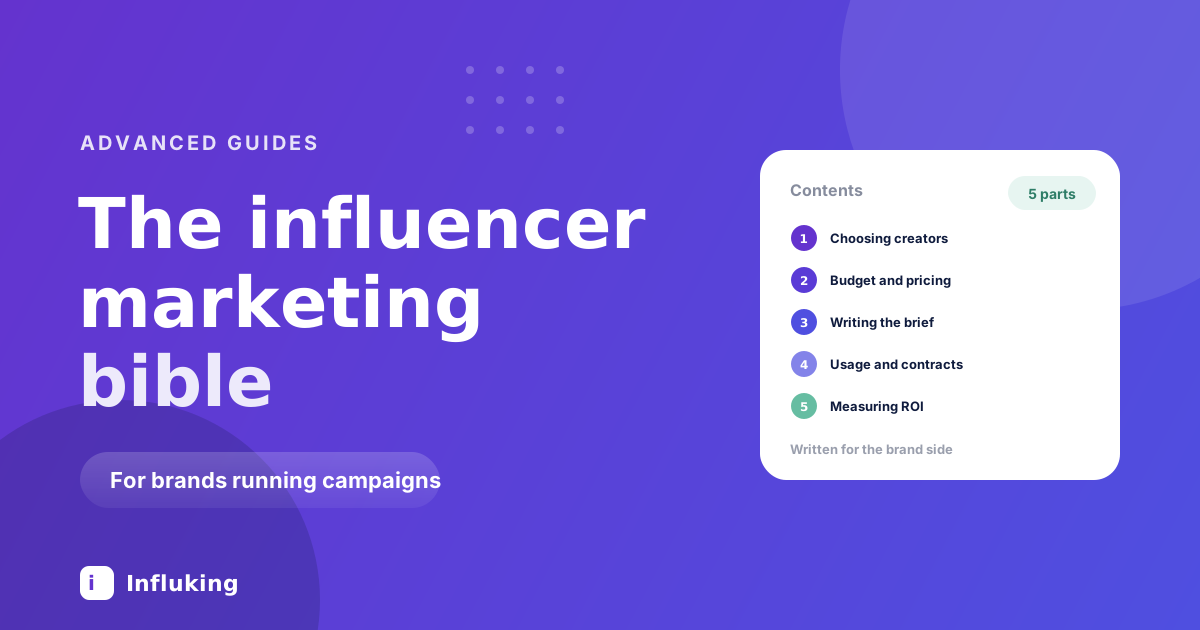
Most of this blog is written for creators. This one is for the people hiring them, because a lot of influencer budget is wasted on decisions made before any content exists.
The failure pattern is consistent: pick by follower count, write a brief that specifies the script, buy vague usage, then measure reach and conclude the channel does not work.
Part one: choosing creators
Follower count is the least useful selection criterion available and the most used.
- Audience match over audience size. A 6,000-follower account whose followers are your exact customer outperforms a 200,000-follower general account, usually by a lot.
- Engagement rate, calculated properly. Ask for it measured on reach rather than followers, and ask which interactions are included. The engagement rate guide explains why the same account can honestly report wildly different numbers.
- Comment quality. Read the comments. Generic emoji from the same handful of accounts is what a pod looks like from outside.
- Audience geography. Irrelevant reach is worth nothing regardless of the rate.
- Growth shape. Smooth curves are fine. Vertical jumps of thousands in a day are not.
- Consistency across posts. Two posts at 15% and eleven at 0.8% is a different account from a steady 4%.
Smaller creators generally convert better per follower, which is the pattern behind earnings by tier. Several micro creators usually beat one macro creator on the same budget.
Part two: budget and pricing
Understand what you are actually buying, because the fee is often the smallest part of the cost.
What influencers charge and the rate card guide show how creators structure pricing. The lines that matter to you are usage rights, paid amplification and exclusivity, and they should be priced separately rather than assumed.
Asking for perpetual all-media usage at an organic-post price is the most common reason a negotiation stalls. If you genuinely need the content for ads indefinitely, budget for it, because you are buying an asset rather than renting a post.
If you mainly need content rather than reach, you may want UGC instead, which costs less and does not depend on the creator's audience at all.
Part three: the brief
The single biggest lever on campaign performance, and the one most often written badly.
Specify the outcome and the constraints. Do not specify the script. You are hiring someone because their audience responds to how they talk, and a brand-written script removes exactly that.
- What success looks like. Awareness, sales, installs. This changes everything downstream.
- Non-negotiables. Claims you must make, claims you cannot make, compliance requirements, product handling.
- What to avoid. Competitor mentions, particular framings, anything that went wrong before.
- Deliverables, precisely. Formats, quantity, deadline, revision rounds.
- Freedom on everything else. Hook, structure, tone, and where the product appears.
Insisting the product appears in the first second is the most reliable way to reduce a campaign's reach, because it destroys retention and Instagram stops distributing the post. Creators know this; briefs frequently override them.
Part four: contracts and usage
Get the usage right and most disputes disappear.
Name the media, the duration and the territory. "In perpetuity, all media" is the maximum grant and will be priced accordingly by anyone who reads their contracts, which increasingly they do. Contracts explained covers the clauses from the creator's side, which is worth reading precisely because it shows what they are looking for.
Two things to include that protect you: a disclosure requirement, since undisclosed advertising breaches Indian guidelines and the exposure includes the brand, and a defined approval process with a deadline, so the campaign does not stall on your side.
If you want the post on your own profile too, that is a collaboration post and a separate deliverable with a value.
Part five: measuring it
Reach is the weakest metric available and the most reported.
- Saves and shares. Stronger signals of genuine interest than likes, and they predict continued distribution.
- Non-follower reach share. Tells you whether the post travelled beyond the audience you already paid for.
- Traffic and conversions. Unique links or codes per creator. Without these you are guessing.
- Cost per result rather than cost per post, compared across creators.
- Content performance in paid. Often the real return, since creator content frequently outperforms studio assets as ad creative.
Attribution is genuinely hard here, because a lot of the effect is delayed and indirect. Comparing branded search volume before and after a campaign is a rough but useful check.
What good brands do differently
- Pay on time. The cheapest reputation you can buy in a small industry.
- Book the same creators repeatedly. Repeat partnerships outperform one-offs because the audience stops reading it as an advert.
- Give a real brief and then get out of the way.
- Ask for the retention graph, not just the reach number. It tells you whether the creative worked.
- Treat creators as suppliers with terms, not as a favour being done.
The mistakes that waste budget
Choosing by follower count. Writing the script. Demanding the product in second one. Buying perpetual usage you will never use. Paying late. Running one post with one creator and calling it a test, when a fair test is several creators over several weeks.
Influencer marketing works when it is treated as buying access to a specific audience through someone that audience trusts. It fails when treated as cheap advertising with a person in front of it. If you would rather have the matching, briefing and payment handled, that is what Influking is for.