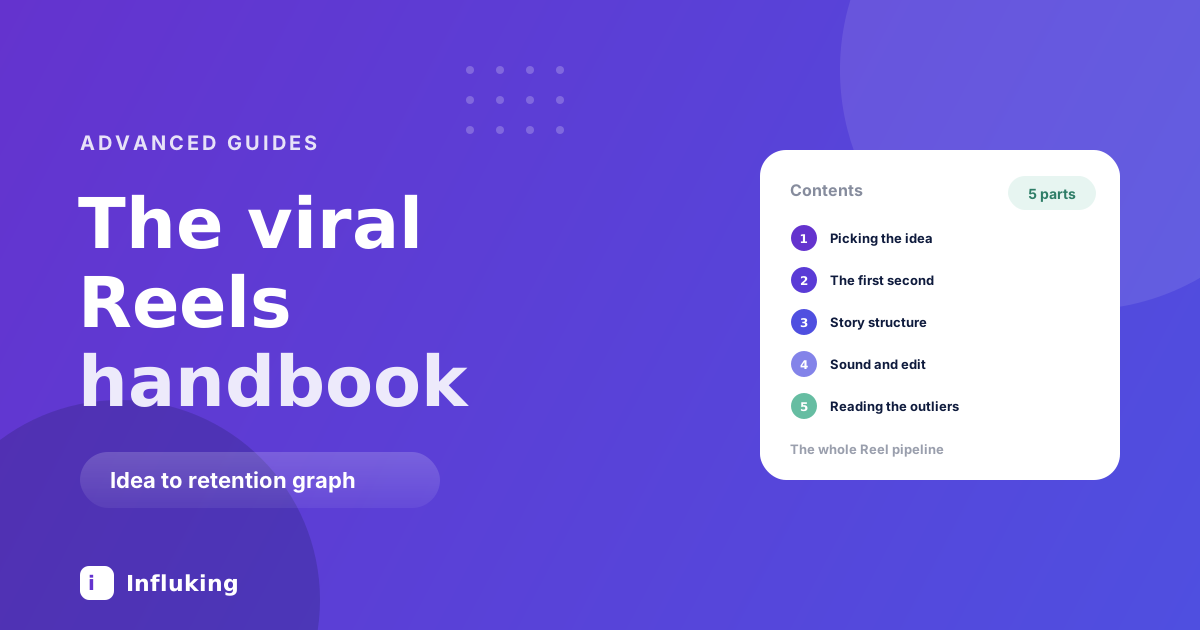
A Reel that travels is not a lucky post. It is five decisions that each had to go right, and the earliest ones matter most. Most creators spend their effort on the edit, which is fourth.
This is the pipeline in order, with the detailed guide for each stage.
Stage one: the idea does most of the work
No edit rescues an idea nobody wanted. Before filming, the idea has to pass two tests.
Can a stranger understand it with no context? Reels go to people who have never heard of you. Anything requiring knowledge of your previous posts, your friends or your running jokes will not travel.
Can you picture who sends this to whom? Shares push distribution harder than any other interaction, and they only happen when the post says something the sender wanted to say. If you cannot imagine the accompanying message, expect likes and nothing else.
The supply of ideas is a system rather than inspiration: content ideas for every niche. Ten reusable formats mean one topic becomes ten posts.
How to make viral Reels covers thinking in hit rate rather than hits, which is the mindset shift that makes this sustainable.
Stage two: the first second
Retention decides reach. If most viewers leave before second two, Instagram stops showing the video, and nothing else you did matters.
A hook works on three layers at once: what is said, what is on screen, and what is visually happening. All three in the first second, which is why writing the hook before filming rather than after changes results so much.
Hook formulas has twenty templates across curiosity, value, contrarian, identity and proof, plus the rules that make any of them work.
Write ten and use one. The first hook you think of is almost always the generic version.
Stage three: the shape that holds attention
Attention is held by an unresolved question. A video that gives away its answer at second five gets watched for six.
The storytelling framework covers the four beats: setup, problem, turn, payoff, with the turn deliberately late. It applies to a tutorial as much as to a personal story, which is the part people miss when they decide their niche is not suited to storytelling.
The most common structural failure is resolving too early. The second is a setup that runs long because it explains who you are before the viewer cares.
Stage four: the edit
Now the craft. In order of how much each affects retention:
- Cut every pause. A 45-second take becomes 30 seconds of the same content and feels far more energetic. The highest-value edit there is.
- Captions, read and corrected. Most people watch on mute, and auto-captions always mistake niche vocabulary.
- Sound. Bad audio loses people faster than bad video, per audio that increases watch time.
- Movement on static shots. A slow push in measurably helps a locked-off talking head.
- Colour, lightly and consistently. Per colour grading.
The mechanics are in the Reel editing guide and, app-specifically, the CapCut guide, which also covers the template end-card watermark that quietly costs people reach.
Stage five: publishing
Three things that are decided after the edit and still affect the result.
The cover. It matters less for feed views than people think and enormously for your grid, which is what a visitor scrolls before deciding to follow: thumbnail design.
The caption. It is an index entry as well as a hook, since Instagram search reads it: Instagram SEO and the caption guide.
The first hour. Reply properly to every comment. Early interactions carry more weight and it is the window you control.
Stage six: read what happened
The retention graph tells you which stage failed, which is a far more useful question than whether the video was good.
A cliff in the first two seconds is the hook. A steady drain through the middle is the structure. A drop right before the end means you resolved too early and the payoff was a formality. A flat graph with low reach means the idea did not travel.
Then rank your last twenty Reels by follows gained rather than by views. The top three tell you what to make more of, and that ranking is your content plan. Set it up once in the analytics dashboard.
When one takes off
The mistake is treating it as a lucky day and going back to whatever was next. Make the same thing again with a different subject: same opening line, same structure, numbered.
A one-off hit gets views. A recognisable recurring format gets follows, because following is how someone ensures they see episode four. This is the single highest-leverage response to a good post.
Also check whether the profile can absorb the traffic, since a viral Reel with a profile that does not convert wastes most of it.
What does not work
- Chasing trends outside your subject. Reach without relevance brings followers who never engage again.
- Reposting watermarked video from another app. Down-ranked for recommendation, per mistakes that kill reach.
- Engagement bait. Demoted by policy rather than by accident.
- Judging after an hour. Reels get picked up days later. Give it a week.
- Deleting a slow post. Discards signals it had gathered.
Virality is not a technique, and hit rate is. Do these six stages consistently and the proportion of your posts that travel rises, which is what actually builds an account. One in ten performing well is a working system; waiting for one in a hundred is not.