The gap between a creator earning occasionally and one earning predictably is almost never talent. It is that the second one treats the whole thing as a business with functions, and the first one treats it as making content and hoping.
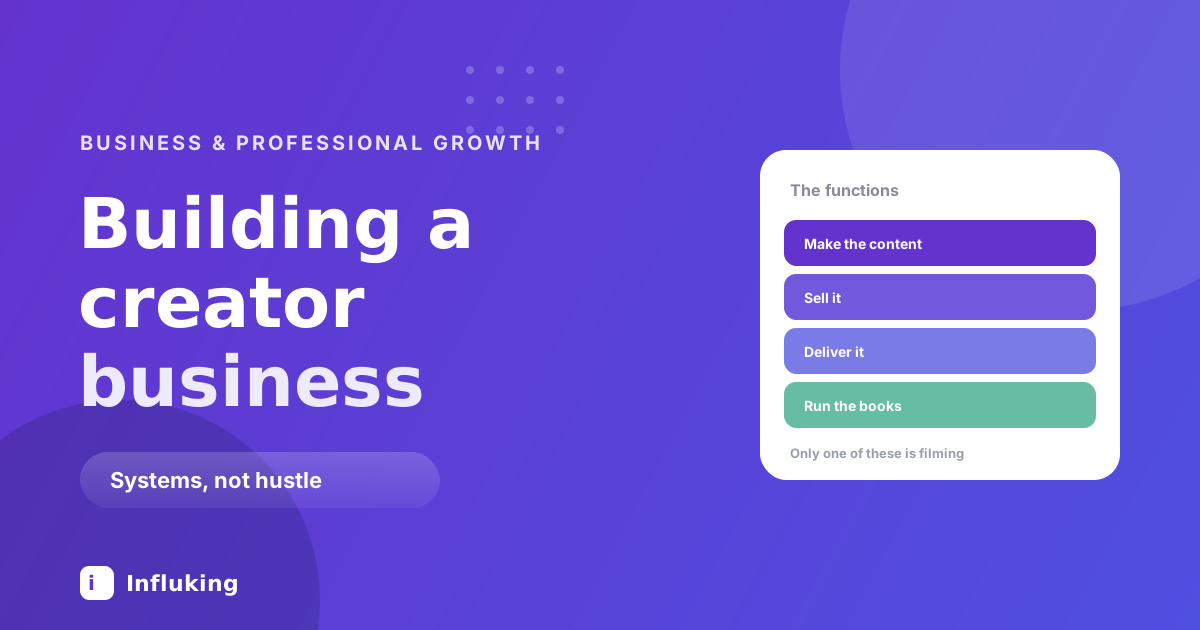
A creator business does four jobs. Make the content, sell it, deliver it, and run the books. Most people do the first well, the second badly, the third inconsistently, and the fourth in a panic every March.
The four functions
- Make. Ideas, filming, editing, publishing. The part everyone enjoys and the only part most creators track.
- Sell. Outreach, pitching, negotiating, closing. This is what separates people with similar audiences and wildly different incomes.
- Deliver. Briefs, deadlines, revisions, client communication. Being easy to work with is why brands rebook, and rebooking is where the money actually is.
- Run. Invoicing, chasing payment, records, tax, structure. Unglamorous, and the difference between earning and keeping.
Weakness in any one caps the whole thing. Excellent content with no selling produces a large audience and a small income, which is a common and frustrating place to be.
Know your real numbers
Three figures change how you make decisions, and most creators know none of them.
Revenue per post. Total income for the month divided by posts published. It tells you whether making more is actually paying, and it usually shows that a small number of posts produce almost everything.
Your effective hourly rate. Take one recent brand deal, add up every hour including the emails, the briefing call, filming, editing, revisions and chasing the invoice, and divide. The number is usually lower than expected, and it is the number that tells you what to stop doing or start charging for.
Concentration. What share of income came from your largest client and your largest income type. Anything over about half is a risk, which is what multiple income streams is really about.
What to systematise, in order
Systematise the things that are repetitive and consequential, not the things that are annoying.
- Content pipeline. A bank of ideas, a filming day, a publishing schedule. This one buys back the most time, and the productivity systems post covers the mechanics.
- Deal tracking. One sheet with every conversation and a next action. Deals die from being forgotten more than from being refused, per the creator CRM post.
- Templates. Pitch, follow-up, rate reply, invoice, contract confirmation. Written once, used forever.
- Money. A separate bank account, an invoice template, a percentage set aside for tax.
- Review. A recurring look at what worked, covered in the monthly review.
Price your time, not just your posts
Creators price deliverables and then absorb everything around them: the calls, the revisions, the reshoot because the brand changed its mind, the three weeks of chasing payment.
Two fixes. Include the overhead in the rate rather than pretending a Reel is two hours of work when it is eight. And put boundaries in writing so extra work is billable rather than absorbed, which is what the scope and revision clauses in contracts are for.
A useful exercise: work out what you would need to earn per deal to hit your target income at a sustainable number of deals per month. If the answer is far above your current rate, the problem is pricing rather than volume.
Going full time
The decision is usually framed emotionally and should be arithmetic.
- Six months of expenses saved. Creator income is lumpy and payment terms are long, so a good month can be followed by an empty account.
- Creator income covering essential costs for three consecutive months. Not one exceptional month.
- Repeat clients, not one-offs. Two or three brands that have booked you more than once is a much stronger signal than five who booked once.
- A pipeline you can see. Work agreed for the next two months, not hoped for.
- Health cover and tax provision handled. Both disappear when you leave employment and both are expensive to discover late.
Going full time also removes the constraint that was keeping your posting realistic. Plenty of people go full time and produce less, because the deadline pressure of a limited evening was doing more work than they realised.
Reinvesting
The first hire is usually an editor, because editing is the largest repetitive time cost and the easiest to hand over with a clear brief, which the hiring guide covers. After that, whatever function you are worst at rather than whatever you dislike most.
A reasonable rule while growing: spend on things that buy back hours or increase what you can charge, and be slow about anything else. New gear rarely does either past a basic threshold.
What breaks as you grow
- Everything in your head. Fine at two deals a month, impossible at eight.
- Being the only person who can do anything. Nothing survives you being ill.
- Saying yes to everything. Low-value work crowds out the work that pays properly, and the fix is raising rates rather than working more hours.
- No separation between life and work. The account is always on, and without deliberate boundaries the business consumes the person making it.
- Money mixed together. Makes every financial question harder, per the tax guide.
Structure comes later than people think
Registering a company is a decision with real costs and it rarely needs making in year one. What matters earlier is a separate bank account, proper invoicing, and records. The structure post covers when it starts to make sense.
The businesses that last are boring in the right places. Predictable pipeline, written terms, money set aside, one system per function. That frees up the unpredictable, interesting part for the content itself, which is the only bit an audience ever sees.