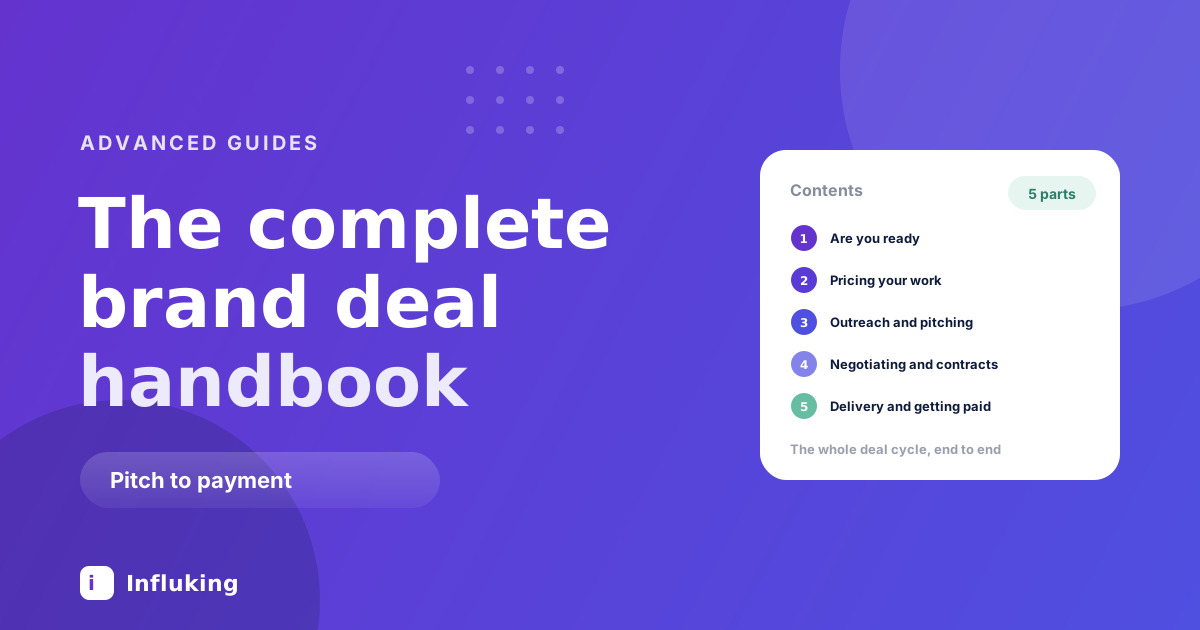
Brand work has a predictable sequence, and creators lose money at predictable points in it. Usually not at the price, which is where all the attention goes, but at usage rights, scope creep and payment terms.
This maps the whole cycle. Each part links to the full guide for that stage.
Part one: are you ready
You need an audience a brand wants to reach, not a large one. A 2,000-follower account with high engagement in a specific niche is more sellable than a 40,000-follower general lifestyle page, and brands run follower-quality checks now.
Getting your first paid collaboration covers the readiness question and where first deals actually come from. Before you pitch anyone, know your engagement rate calculated on reach, because it is the first number they check.
Build the media kit once. It answers the questions every brand asks and saves you writing them out repeatedly.
Part two: pricing before you talk
Work out your numbers before a conversation starts, or you will be negotiating and pricing simultaneously, which goes badly.
How much should influencers charge covers benchmarks and the better method of pricing on views rather than followers. The rate card guide turns that into a document with separate lines for each deliverable, which is what makes a counter-offer easy to justify later.
Earnings by tier is useful context for what is realistic at your size, and for why micro creators often out-earn much larger accounts per hour.
Part three: outreach
Most deals do not arrive. You go and get them, and most creators send far fewer pitches than they think.
Brand outreach email templates has copy for the six situations that come up: the cold pitch, the follow-up, converting a gifted offer, reconnecting, answering a rate request, and the polite no.
Two things decide results here. Pitching a specific idea rather than asking to collaborate, and following up once. The follow-up produces more deals than the first email and almost nobody sends it.
Track it all in one place, or conversations that were going well simply disappear: creator CRM.
Part four: negotiating and contracts
This is where the money actually moves.
Negotiating with brands covers not naming a number first, the questions to ask before quoting, and the four things that change the price more than the fee does: usage rights, paid amplification, exclusivity and timeline.
Then read the document properly. Contracts explained goes clause by clause, with particular attention to the usage clause, which is where most creators give away the most without noticing.
Before agreeing anything, run the checks in red flags in brand deals. Five minutes, and it separates outright fraud from a real brand making a bad offer, which need completely different responses.
Part five: delivery and getting paid
The part that decides whether they book you again, which is where creator income actually stabilises.
Managing clients covers the kickoff confirmation, communicating on a schedule, handling revisions, and the results summary that wins the rebooking. That summary takes fifteen minutes and almost nobody sends it.
How to invoice brands covers what every line needs and the escalation sequence when payment does not arrive. Most late payments are invoices that could not be processed rather than brands refusing to pay.
Then keep what you earned: the tax guide and GST basics.
Adjacent work worth knowing about
UGC is content a brand posts on its own channels, priced on usage rather than followers, and it works with almost no audience. Affiliate pays nothing per post and keeps paying from old content. Both are covered in multiple income streams, which explains the order to add them in.
Where the money is actually lost
- Naming a price before knowing the scope. Creates a ceiling you defend for the rest of the thread.
- Giving away perpetual usage. Selling the asset at rental price, and the most common expensive mistake.
- Uncapped revisions. Turns a fixed job into an open one.
- Payment on publication. Ties your money to a schedule you do not control.
- Not following up. Most lost income is threads nobody revisited.
- No results summary afterwards. The cheapest rebooking tool available, skipped by almost everyone.
A first campaign, start to finish
- Know your engagement rate on reach and build a one-page media kit.
- Set rates with separate lines for deliverables, usage and exclusivity.
- Pitch ten brands with a specific idea each. Follow up once after a week.
- When someone replies, ask the scope questions before quoting.
- Quote with line items and one smaller alternative option.
- Read the usage clause twice before signing.
- Send a kickoff confirmation, then deliver early.
- Invoice on delivery with full details and a purchase order number.
- Send a results summary two weeks after publication and ask about the next campaign.
None of this requires a large audience. It requires doing the unglamorous half, which is why creators with modest followings and good process often earn more than larger accounts that only make content. If you would rather have the matching, briefs and payment schedule handled, that is what Influking does.