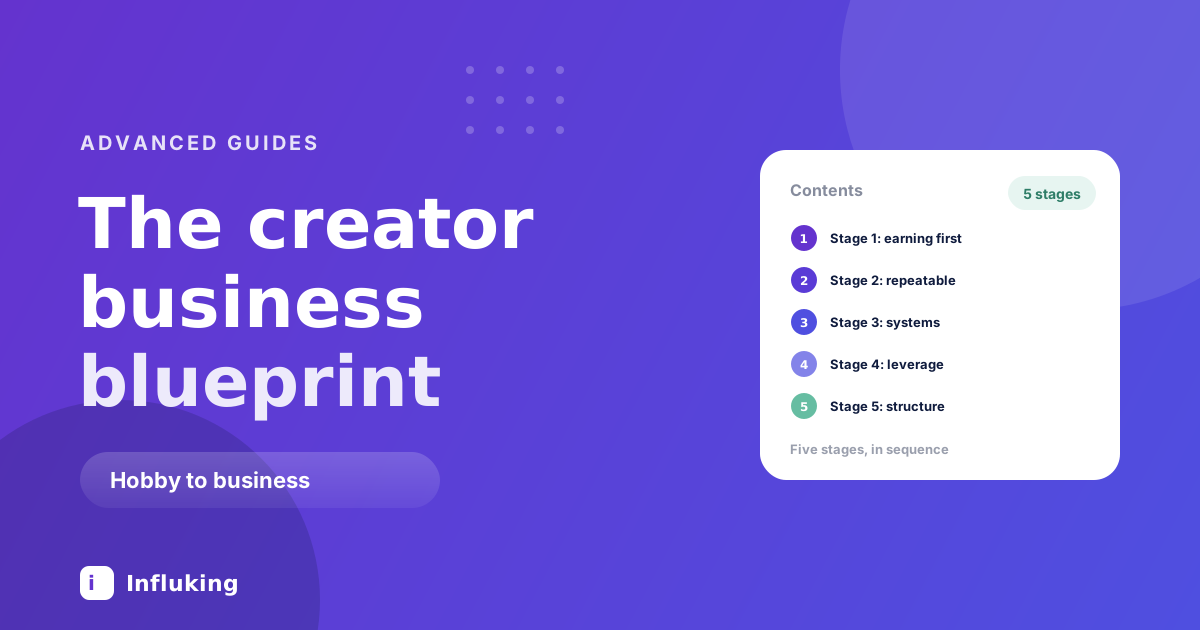
Creator businesses fail in a predictable order. People chase audience before income, income before systems, and systems before they have anything worth systematising. Each stage depends on the one before it holding.
This is the sequence, with what to fix at each point and where the detail lives.
Stage one: earn something at all
The goal: one paid piece of work, from anyone.
The mistake here is waiting for a follower number. Plenty of creators cross 20,000 followers having never earned a rupee, because they were building an audience rather than a business, and those are different activities.
Two fastest routes. UGC work, which needs no audience at all because brands are buying the content rather than your reach. And services, which means selling the thing people already ask you about in DMs.
Then your first paid collaboration for the brand-deal route.
You have finished this stage when: money has arrived from work you did.
Stage two: make it repeatable
The goal: income that arrives because of a process, not luck.
One deal is an anecdote. The job now is knowing where the next one comes from, which means outreach volume and a way to track it.
Set prices properly first, with separate lines for deliverables and usage, per the rate card guide. Then send pitches consistently using the outreach templates, and track every conversation in a simple CRM, because deals die from being forgotten more than from being refused.
Learn to negotiate before the deals get larger, since the habits you form now are the ones you keep: negotiating with brands.
Finished when: you can say how many pitches produce one deal, and roughly what a deal is worth.
Stage three: build the systems
The goal: a bad week costs you nothing.
This is where most people stall, because it is entirely unglamorous and nothing about it is visible to an audience.
- Content pipeline. An idea bank, a filming day, a two-week buffer. Content ideas and productivity systems.
- Money hygiene. A separate account, sequential invoices, a percentage set aside. Invoicing and the tax guide.
- Client process. Kickoff confirmations, scheduled updates, a results summary afterwards. Managing clients, and this is what turns one-off brands into repeat ones.
- Measurement. An analytics dashboard and a monthly review, so decisions come from numbers rather than mood.
Finished when: you take a week off and nothing breaks.
Stage four: buy back time
The goal: your hours go to the work only you can do.
By now the constraint is you. The way past it is removing work that does not require you specifically.
Usually the first hire is editing, since it is the biggest repeatable cost and hands over cleanly with a brief: hiring an editor. The reclaimed hours only pay if they go to selling or making rather than to more editing.
This is also the point to reduce single-client risk, since losing your largest client should be annoying rather than existential: multiple income streams, added in an order where each reuses work you already do.
Finished when: no client is more than about a third of income, and someone else does at least one function.
Stage five: structure and durability
The goal: the business survives changes in the platform, the market and your enthusiasm.
Now the questions become structural. Whether to register an entity, covered in creating a company, which is genuinely later than most advice suggests. Whether the positioning still fits, covered in rebranding. And whether the whole thing is still what you want to do, which is the question the quarterly review exists to force.
Platform risk sits here too. An account is a tenancy rather than an asset, and everything on it can change without notice. The hedge is owning a direct line to your audience and having income that does not depend on this month's reach.
How to tell which stage you are in
- No income yet. Stage one. Stop optimising content and go sell something.
- Income that surprises you when it arrives. Stage two. You need volume and tracking.
- Busy, earning, permanently behind. Stage three. Systems, not effort.
- Systems working but you are the bottleneck. Stage four. Hire.
- Stable and slightly bored. Stage five. Ask the structural questions.
The three mistakes that repeat
Skipping stage two. Building systems before knowing where income comes from means systematising nothing.
Hiring to escape a problem rather than to scale one that works. An editor does not fix content nobody wants.
Treating audience growth as the business. The two are related and not the same, which is why creators with modest followings and good process routinely out-earn much larger accounts. The creator business post covers the four functions this depends on.
Almost nobody moves through these cleanly, and that is fine. What matters is knowing which stage the current problem belongs to, because applying stage-four solutions to a stage-two problem is how people end up with an editor, a CRM and no income.